
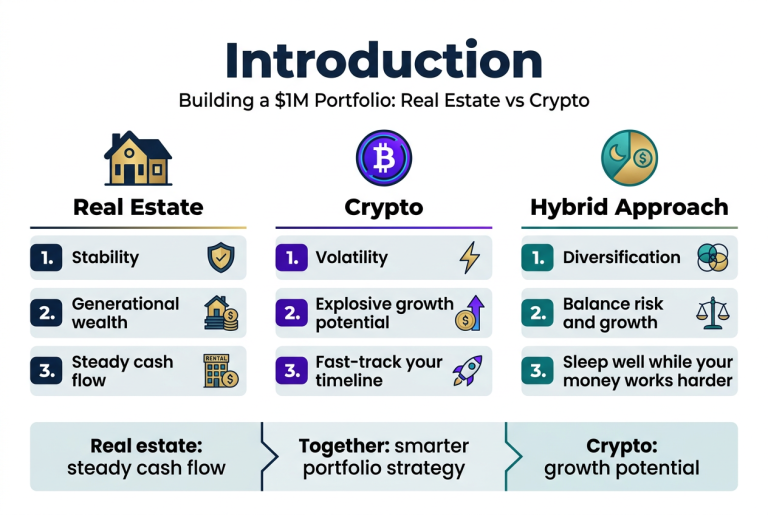

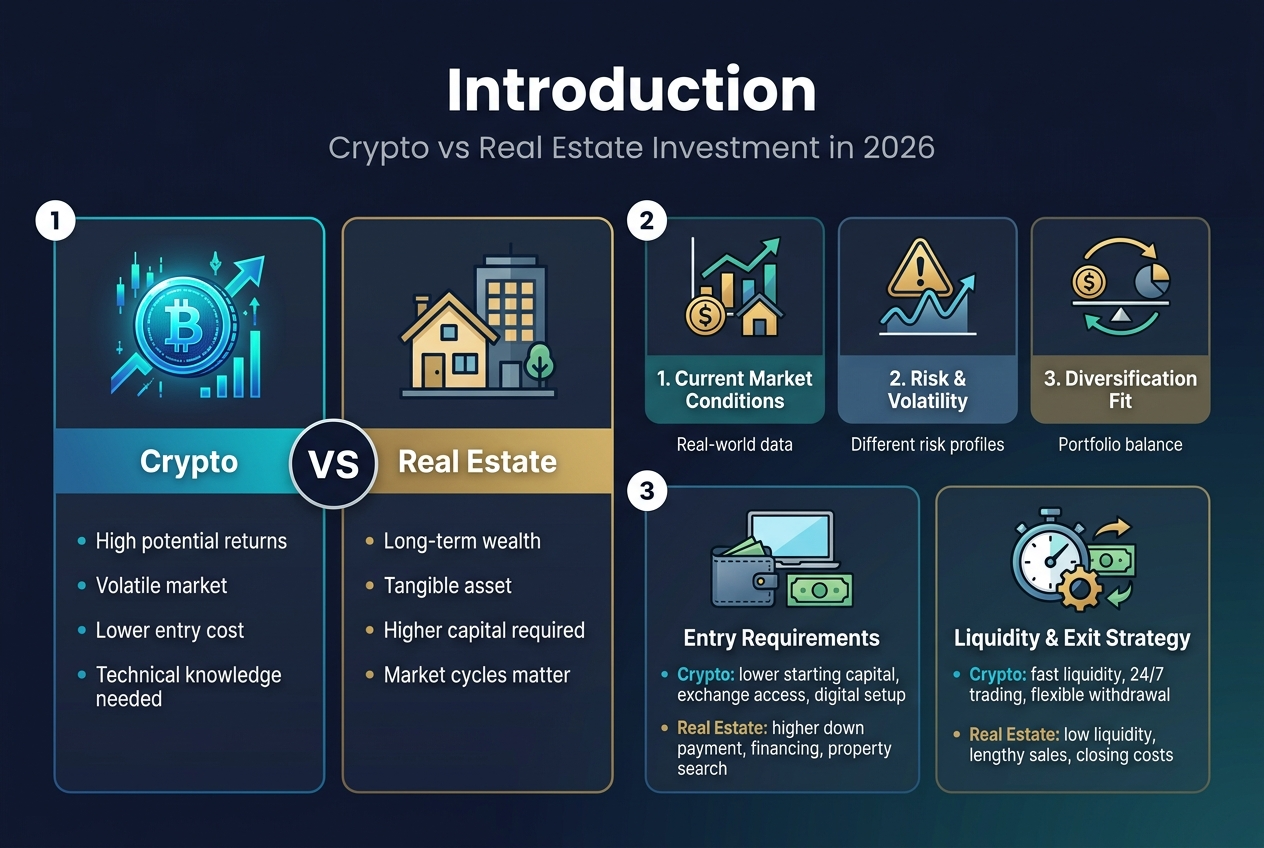
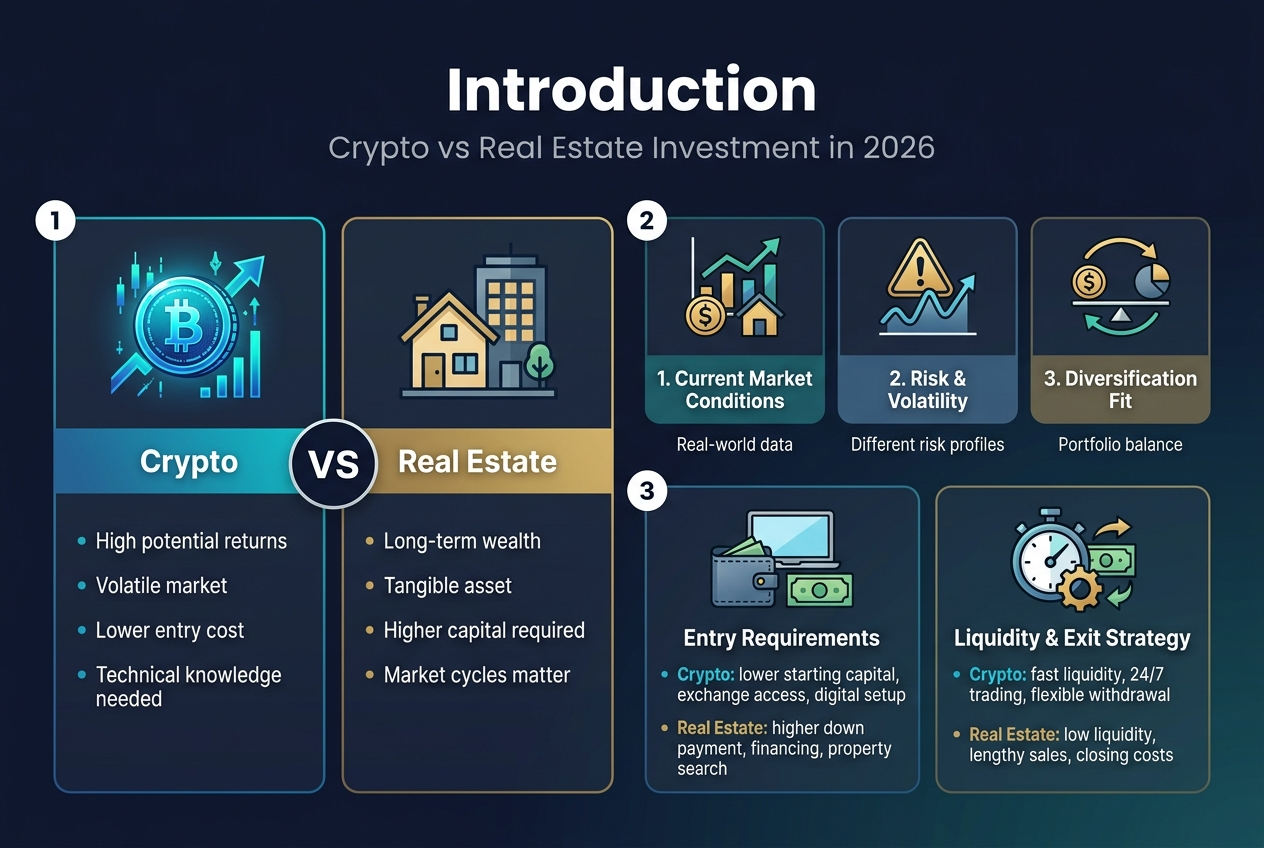
Choosing between crypto vs real estate investment has become one of the most debated topics among investors as we head into 2026. Both asset classes offer unique opportunities, but they come with vastly different risk profiles, entry requirements, and potential returns that can make or break your financial future.
This comprehensive investment guide is designed for both seasoned investors and newcomers who want to make informed decisions about where to allocate their money in today’s evolving market. Whether you’re sitting on cash wondering about your next move or looking to rebalance your existing portfolio, understanding these two powerhouse investment options is crucial for building long-term wealth.
We’ll dive deep into the current market conditions shaping both cryptocurrency and property markets right now, giving you the real-world data you need to assess which path aligns with your goals. You’ll also get a thorough breakdown of risk levels and volatility patterns – because let’s face it, nobody wants nasty surprises with their hard-earned money. Finally, we’ll explore how each option fits into a diversified investment strategy and what it actually takes to get started in each market, from minimum capital requirements to the technical know-how you’ll need.
By the end of this analysis, you’ll have a clear picture of which investment strategy makes the most sense for your specific situation in 2026.
Current Market Landscape Analysis for Both Investment Options

Cryptocurrency Market Trends and Adoption Rates in 2026
The cryptocurrency landscape has experienced remarkable maturation since its early speculative days. Bitcoin now trades around established support levels while maintaining its position as digital gold, attracting institutional investors who view it as an inflation hedge. Ethereum’s transition to proof-of-stake has solidified its role as the backbone of decentralized finance (DeFi), with smart contract adoption reaching new heights across industries.
Major corporations have integrated crypto into their treasury strategies, with companies like MicroStrategy and Tesla leading the charge. Payment processors now seamlessly handle cryptocurrency transactions, making digital assets accessible for everyday purchases. Central Bank Digital Currencies (CBDCs) have launched in over 30 countries, bridging traditional finance with digital innovation.
The total crypto market capitalization has stabilized above $2 trillion, demonstrating increased investor confidence. Layer-2 solutions have addressed scalability concerns, reducing transaction costs and improving user experience. NFT markets have evolved beyond art collectibles into utility-focused applications in gaming, real estate tokenization, and identity verification.
Real Estate Market Conditions and Pricing Dynamics
Real estate markets globally show mixed signals as we navigate 2026’s economic environment. Residential property prices have moderated from their pandemic-era peaks, creating opportunities for strategic investors. Urban markets face pressure from remote work trends, while suburban and secondary cities experience sustained demand.
Commercial real estate undergoes structural transformation as office spaces adapt to hybrid work models. Retail properties in prime locations maintain value, but secondary mall properties struggle with changing consumer behaviors. Industrial and logistics properties continue outperforming other sectors, driven by e-commerce growth and supply chain reshoring initiatives.
Key Market Metrics:
| Property Type | Average Annual Return | Vacancy Rates | Price Trend |
|---|---|---|---|
| Residential | 6-8% | 7-9% | Stable |
| Commercial Office | 4-6% | 12-15% | Declining |
| Industrial/Logistics | 8-12% | 3-5% | Rising |
| Retail | 3-5% | 8-11% | Mixed |
Interest rates have stabilized around 5-6% for conventional mortgages, creating a more predictable lending environment. Real estate investment trusts (REITs) offer liquid exposure to property markets, with dividend yields averaging 4-5% annually.
Economic Factors Influencing Both Markets
Inflation concerns drive investment decisions across asset classes, with both crypto and real estate serving as potential hedges. The Federal Reserve’s monetary policy stance directly impacts both markets – rising rates typically pressure crypto valuations while affecting real estate affordability and cap rates.
Global economic uncertainty has increased correlation between traditional and alternative assets during stress periods. Supply chain disruptions continue affecting construction costs and timelines, supporting existing property values. Energy costs influence mining operations for proof-of-work cryptocurrencies and building operational expenses for real estate.
Currency devaluation in emerging markets has accelerated crypto adoption as a store of value. Demographic shifts, particularly aging populations in developed nations, create long-term real estate demand patterns while younger generations gravitate toward digital assets.
Regulatory Environment Impact on Investment Decisions
Cryptocurrency regulation has evolved from uncertainty to structured frameworks in most developed markets. The European Union’s Markets in Crypto-Assets (MiCA) regulation provides clarity for digital asset operations. In the United States, clearer guidance from the SEC has reduced regulatory risk for institutional crypto adoption.
Tax treatment varies significantly between jurisdictions, affecting investment strategy decisions. Some countries offer favorable crypto tax regimes, while others maintain traditional capital gains structures. Real estate enjoys established tax advantages including depreciation deductions and 1031 exchanges in the US market.
Banking partnerships with crypto exchanges have improved, enabling seamless fiat-to-crypto conversions. Traditional financial institutions now offer crypto custody services and investment products, legitimizing digital assets for conservative investors.
Real estate regulation remains relatively stable, with local zoning laws and building codes evolving slowly. Environmental regulations increasingly impact both sectors – carbon credit systems affect crypto mining operations while green building standards influence property development costs and values.
Cross-border investment regulations create opportunities for diversified portfolios combining both asset classes across multiple jurisdictions.
Risk Assessment and Volatility Comparison
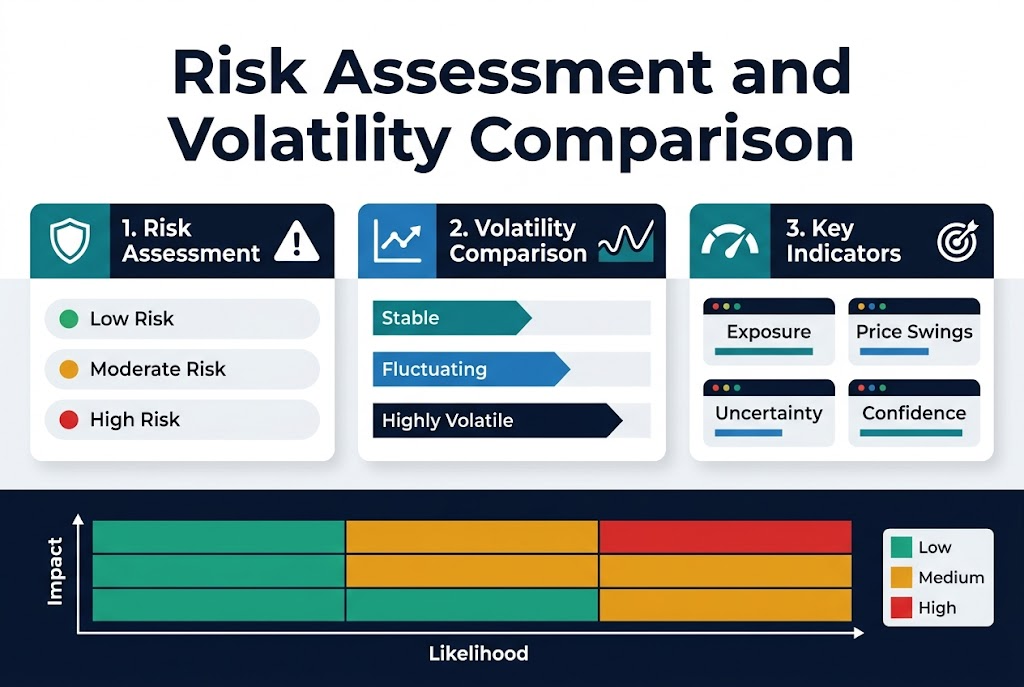
Cryptocurrency price fluctuations and market unpredictability
Cryptocurrency markets operate like digital roller coasters, with price swings that can make even seasoned investors’ heads spin. Bitcoin alone has experienced drops exceeding 80% from its peak values multiple times throughout its history, while altcoins regularly see daily fluctuations of 10-20%. This extreme volatility stems from several factors that make crypto vs real estate investment analysis particularly challenging.
Market sentiment drives crypto prices more than traditional fundamentals. A single tweet from an influential figure can trigger massive sell-offs or buying frenzies within hours. Regulatory announcements, exchange hacks, or technological developments can cause immediate price reactions that dwarf anything seen in traditional markets. The 24/7 nature of crypto trading means there’s never a break from potential price movements, unlike stock markets with their closing hours.
The relative youth of cryptocurrency markets contributes significantly to their unpredictability. Unlike established asset classes, crypto lacks decades of historical data to guide investment risk assessment crypto real estate comparisons. New projects emerge constantly, promising revolutionary technology but often failing to deliver, leaving investors with worthless tokens.
Psychological factors amplify crypto volatility through fear of missing out (FOMO) and panic selling. When prices surge, retail investors pile in without proper research, creating bubbles. When markets crash, mass exodus follows, creating cascading liquidations that drive prices even lower.
Real estate market stability and long-term value trends
Real estate markets operate on fundamentally different principles that create more predictable investment patterns. Property vs digital assets comparison reveals that real estate values typically appreciate steadily over time, with major crashes occurring only during significant economic disruptions like the 2008 financial crisis.
Location remains the primary driver of real estate values, creating natural scarcity that supports price stability. Prime locations in growing metropolitan areas consistently outperform, while even secondary markets show steady appreciation over decades. This predictability makes real estate particularly attractive for investment portfolio diversification strategies.
Real estate values correlate strongly with inflation, providing natural protection against currency devaluation. As construction costs, labor, and materials increase, property values typically rise accordingly. This relationship creates a hedge that cryptocurrency cannot reliably provide, given its disconnection from traditional economic indicators.
Market cycles in real estate span years rather than days or weeks. While crypto can experience multiple boom-bust cycles within a single year, real estate markets typically take 7-10 years to complete full cycles from peak to trough and back to peak. This extended timeline allows investors to make more thoughtful decisions and ride out temporary downturns.
Physical real estate also generates rental income, providing cash flow even during market downturns. This income component reduces overall investment risk and creates multiple return streams that don’t exist with cryptocurrency real estate comparison scenarios.
Liquidity differences between digital assets and property investments
Liquidity represents perhaps the most striking difference between these alternative investment options 2026. Cryptocurrency offers near-instantaneous liquidity, allowing investors to convert digital assets to cash within minutes through major exchanges. This speed can be both beneficial and dangerous, enabling quick profit-taking but also facilitating emotional decision-making during market stress.
Real estate transactions typically require weeks or months to complete, involving inspections, appraisals, financing approvals, and legal procedures. While this slower process frustrates investors seeking quick exits, it also prevents panic selling during temporary market downturns. The forced holding period often works in investors’ favor, allowing time for markets to recover.
Crypto real estate ROI analysis reveals that this liquidity difference creates unique opportunities and risks for each asset class. Crypto’s high liquidity enables active trading strategies and quick rebalancing, but also exposes investors to their own behavioral biases. Real estate’s illiquidity forces a buy-and-hold approach that historically produces better long-term returns for most investors.
Emergency liquidity needs favor cryptocurrency, as investors can access funds immediately without selling physical property. However, real estate offers partial liquidity through refinancing or home equity lines of credit, allowing access to capital while maintaining property ownership.
Transaction costs also differ significantly between these asset classes. Crypto transactions typically cost under 1% of the transaction value, while real estate sales involve 6-10% in fees including commissions, closing costs, and taxes. These high transaction costs make real estate unsuitable for short-term trading strategies that work well with digital assets.
Return on Investment Potential and Historical Performance
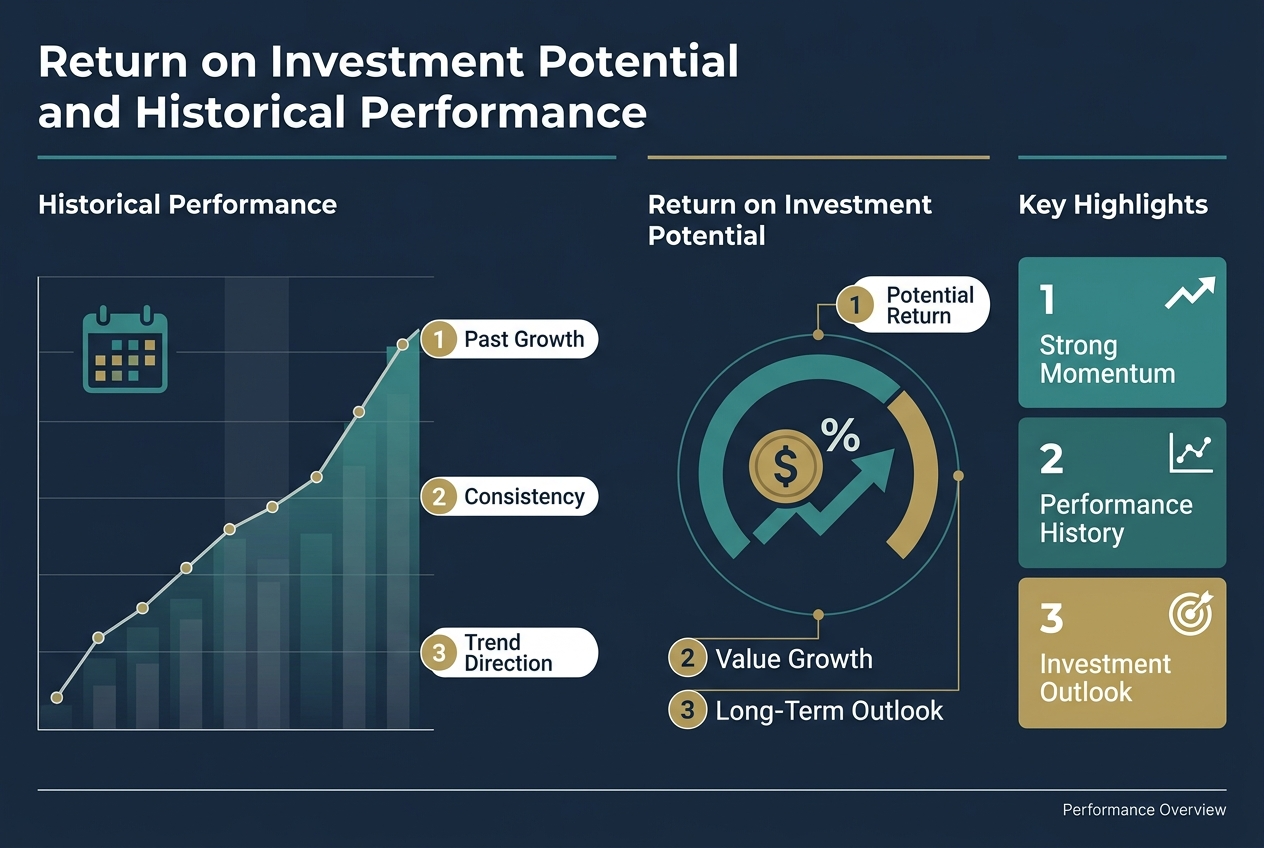
Cryptocurrency Gains and Loss Patterns Over Recent Years
Bitcoin has delivered astronomical returns since its inception, turning $1,000 invested in 2013 into over $30,000 by 2021’s peak. However, the crypto vs real estate investment comparison reveals significant volatility patterns that investors can’t ignore. The 2022 crypto winter wiped out nearly 70% of Bitcoin’s value, while Ethereum fell from $4,800 to under $900.
Recent data shows crypto markets experience boom-bust cycles roughly every four years, coinciding with Bitcoin halving events. During bull markets, returns of 300-1000% aren’t uncommon, but bear markets can destroy 80-90% of portfolio values. Altcoins show even more extreme patterns – some delivering 10,000% gains followed by 99% crashes.
The period from 2020-2021 saw unprecedented institutional adoption, with companies like Tesla and MicroStrategy adding Bitcoin to their balance sheets. This pushed Bitcoin from $10,000 to nearly $69,000. However, regulatory crackdowns, inflation concerns, and macroeconomic factors triggered sharp reversals.
Smart investors tracking crypto real estate ROI analysis notice that cryptocurrency’s 10-year average returns still outperform most traditional assets despite the volatility. The key lies in understanding timing and risk management rather than expecting linear growth.
Real Estate Appreciation Rates and Rental Income Opportunities
Real estate has historically delivered steady 3-5% annual appreciation nationwide, with certain markets significantly outperforming. During the 2020-2022 period, median home prices surged 20-40% in many U.S. markets, driven by low interest rates and pandemic-induced demand shifts.
Rental income provides the foundation for real estate’s wealth-building potential. Quality rental properties typically generate 6-12% gross rental yields, depending on location and property type. Multi-family properties in emerging markets often deliver higher cash flow, while single-family homes in established neighborhoods offer better appreciation potential.
| Investment Type | Average Annual Return | Income Generation | Volatility Level |
|---|---|---|---|
| Residential Real Estate | 8-12% | 6-10% rental yield | Low-Medium |
| Commercial Real Estate | 6-10% | 7-12% rental yield | Medium |
| REITs | 8-15% | 3-6% dividends | Medium-High |
| Cryptocurrency | 15-25% (10yr avg) | Staking: 4-12% | Very High |
Real estate investment trusts (REITs) offer another avenue, providing liquidity similar to stocks while maintaining real estate exposure. Many REITs have delivered consistent 8-15% annual returns with regular dividend payments.
Compounding Benefits and Wealth Building Timelines
Real estate excels at leveraged wealth building through mortgage financing. A $50,000 down payment on a $250,000 property captures appreciation on the full asset value, not just the initial investment. Over 10-15 years, this leverage effect can multiply returns significantly.
Crypto’s compounding potential comes from reinvesting gains during bull markets and dollar-cost averaging during downturns. Investors who consistently bought Bitcoin monthly since 2017 have seen remarkable compound growth despite multiple crashes.
The timeline difference is crucial for investment portfolio diversification strategies. Real estate typically requires 5-10 years to realize substantial gains, while crypto can deliver life-changing returns in 1-3 years during bull cycles. However, crypto’s shorter cycles also mean faster wealth destruction potential.
DeFi protocols now offer yield farming opportunities, with some providing 20-100% annual percentage yields, though these come with smart contract and impermanent loss risks that traditional real estate doesn’t face.
Tax Implications Affecting Net Returns
Real estate enjoys several tax advantages that significantly impact net returns. Depreciation deductions allow property owners to reduce taxable income while the asset potentially appreciates. 1031 exchanges enable tax-deferred property swaps, allowing wealth accumulation without immediate tax consequences.
Cryptocurrency faces less favorable tax treatment. Every transaction triggers a taxable event, making active trading expensive from a tax perspective. Long-term capital gains rates apply only after holding crypto for over one year, creating timing pressures for investors.
Property taxes and maintenance costs offset some real estate advantages, typically running 1-3% of property value annually. However, these expenses are often tax-deductible and can be passed to tenants through rent increases.
Alternative investment options 2026 planning must consider these tax implications. Real estate’s tax benefits make it particularly attractive for high-income earners, while crypto’s immediate liquidity suits investors prioritizing flexibility over tax efficiency.
Investment Requirements and Accessibility Factors
Minimum Capital Needed for Meaningful Crypto Investments
Crypto offers one of the most accessible entry points in the investment world. You can start buying cryptocurrency with as little as $10-50 on most major exchanges like Coinbase, Binance, or Kraken. This low barrier to entry makes crypto vs real estate investment comparisons particularly interesting for new investors.
However, meaningful crypto investments that can generate substantial returns typically require more capital. Most experts suggest starting with at least $1,000-5,000 to build a diversified crypto portfolio that includes major coins like Bitcoin and Ethereum, along with some promising altcoins. This amount allows you to:
- Spread risk across multiple cryptocurrencies
- Cover transaction fees without them eating into your returns significantly
- Weather market volatility without panicking over small dollar amounts
- Take advantage of dollar-cost averaging strategies
The beauty of crypto lies in its fractional ownership capability. You don’t need $60,000 to own Bitcoin – you can buy 0.01 Bitcoin and still participate in its price movements. This flexibility makes cryptocurrency an attractive option for investors with varying budget sizes.
Down Payment Requirements and Financing Options for Real Estate
Real estate presents a much higher financial barrier to entry. Traditional real estate investment typically requires 20-25% down payment for investment properties, though some scenarios allow for lower percentages:
| Property Type | Typical Down Payment | Minimum Investment |
|---|---|---|
| Primary Residence | 3-5% | $15,000-25,000 |
| Investment Property | 20-25% | $60,000-125,000 |
| Commercial Real Estate | 25-35% | $125,000-350,000 |
Real estate financing options provide leverage opportunities that crypto lacks:
- Conventional mortgages offer long-term, relatively low-interest financing
- FHA loans reduce down payment requirements for primary residences
- Hard money loans provide quick financing for fix-and-flip projects
- Real Estate Investment Trusts (REITs) offer indirect real estate exposure with lower capital requirements
This leverage potential means your $100,000 down payment could control a $400,000 property, amplifying both returns and risks compared to crypto investments.
Technical Knowledge and Expertise Demands
Crypto investment success requires understanding blockchain technology, wallet security, exchange operations, and market dynamics. New investors must learn:
- Wallet management: Distinguishing between hot and cold storage, private keys, and security protocols
- Exchange navigation: Understanding trading pairs, limit orders, and fee structures
- Market analysis: Reading charts, understanding market cap, and evaluating project fundamentals
- Security practices: Protecting against phishing, securing private keys, and recognizing scams
The learning curve can be steep, but abundant online resources, courses, and communities help newcomers get started quickly.
Real estate demands different expertise:
- Market analysis: Understanding local property values, rental rates, and neighborhood trends
- Legal knowledge: Grasping contracts, tenant laws, and property regulations
- Financial analysis: Calculating cash flow, cap rates, and return on investment
- Property management: Handling maintenance, tenant relations, and property improvements
Real estate knowledge often requires local market familiarity and hands-on experience that takes years to develop fully.
Time Commitment and Active Management Needs
Crypto can be as passive or active as you choose. Buy-and-hold strategies require minimal time investment – perhaps a few hours monthly to review your portfolio and rebalance if needed. Active crypto trading demands constant market monitoring, technical analysis, and quick decision-making, often requiring several hours daily.
Real estate investment time commitment varies dramatically:
- Turnkey rentals: 2-5 hours monthly for basic oversight
- Self-managed properties: 10-20 hours monthly for tenant management, maintenance coordination, and bookkeeping
- Fix-and-flip projects: 20+ hours weekly during active renovation phases
- Large portfolio management: Full-time commitment requiring dedicated staff
The best investment strategy 2026 depends heavily on your available time and management preferences. Crypto offers more flexibility for busy professionals, while real estate can provide steady cash flow for those willing to invest the time and effort required for active property management.
Diversification Benefits and Portfolio Integration Strategies
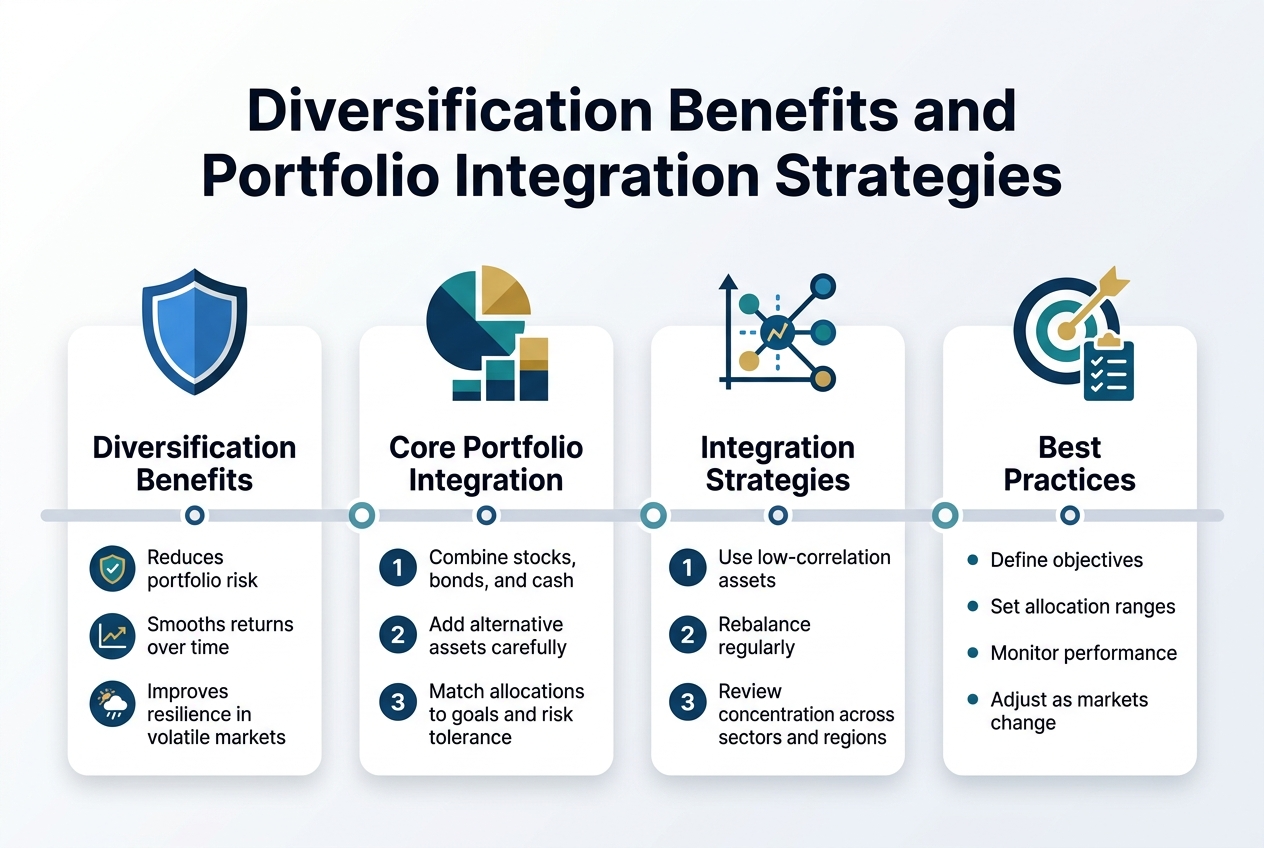
How cryptocurrency complements traditional investment portfolios
Cryptocurrency brings a unique dynamic to traditional investment portfolios that stocks, bonds, and cash simply can’t match. The digital asset class operates on fundamentally different market cycles and responds to distinct economic drivers, making it an effective diversifier when other investments struggle.
Bitcoin and major cryptocurrencies often show low correlation with traditional markets during certain periods. When stock markets face pressure from rising interest rates or geopolitical tensions, crypto markets might surge based on adoption news, regulatory clarity, or institutional investment flows. This inverse relationship becomes particularly valuable during market stress periods.
The 24/7 trading nature of cryptocurrency markets offers portfolio managers flexibility that traditional assets lack. While real estate and stock markets have specific operating hours and settlement periods, crypto positions can be adjusted instantly based on market conditions or portfolio rebalancing needs.
Smart investors typically allocate 5-15% of their portfolios to cryptocurrency for this diversification benefit. The key lies in selecting established cryptocurrencies with strong use cases rather than speculative altcoins. Bitcoin serves as “digital gold” while Ethereum provides exposure to the growing DeFi and smart contract ecosystem.
Real estate as a hedge against inflation and market downturns
Real estate investment continues to serve as one of the most reliable hedges against inflation and economic uncertainty. Property values and rental income naturally adjust upward with rising prices, protecting purchasing power when currencies weaken.
During inflationary periods, real estate typically outperforms bonds and cash while providing steady income streams. Rental properties generate monthly cash flow that often increases with inflation, creating a double benefit of capital appreciation and growing income. This makes real estate particularly attractive in the current economic environment where inflation concerns persist.
The tangible nature of real estate provides psychological comfort during market volatility. Unlike crypto’s wild price swings or stock market crashes, property values tend to move more gradually, giving investors time to adapt their strategies. Even during severe economic downturns, people still need housing, making residential real estate relatively recession-resistant.
Real Estate Investment Trusts (REITs) offer an accessible way to gain real estate exposure without direct property ownership. These publicly traded funds provide diversification across property types and geographic regions while maintaining liquidity that direct real estate investment lacks.
Optimal allocation percentages for balanced risk management
Creating the right balance between crypto, real estate, and traditional investments depends on individual risk tolerance, investment timeline, and financial goals. Professional portfolio managers typically recommend specific allocation ranges based on investor profiles.
| Investor Profile | Cryptocurrency | Real Estate | Traditional Assets |
|---|---|---|---|
| Conservative | 2-5% | 10-20% | 75-88% |
| Moderate | 5-10% | 15-25% | 65-80% |
| Aggressive | 10-20% | 20-30% | 50-70% |
Young investors with longer time horizons can typically handle higher allocations to both crypto and real estate, as they have more time to recover from potential downturns. Those approaching retirement might prefer lower crypto exposure while maintaining real estate for inflation protection.
Geographic diversification within real estate holdings reduces regional market risks. Combining domestic properties with international real estate exposure through REITs or global property funds spreads risk across different economies and currencies.
The crypto allocation should focus on established digital assets rather than experimental tokens. A typical balanced approach might include 70% Bitcoin, 20% Ethereum, and 10% other major cryptocurrencies with proven track records.
Regular rebalancing ensures these target allocations remain intact as market movements shift portfolio weights. Many successful investors rebalance quarterly or when any asset class deviates more than 5% from target allocation, maintaining the intended risk profile while capturing gains from outperforming assets.
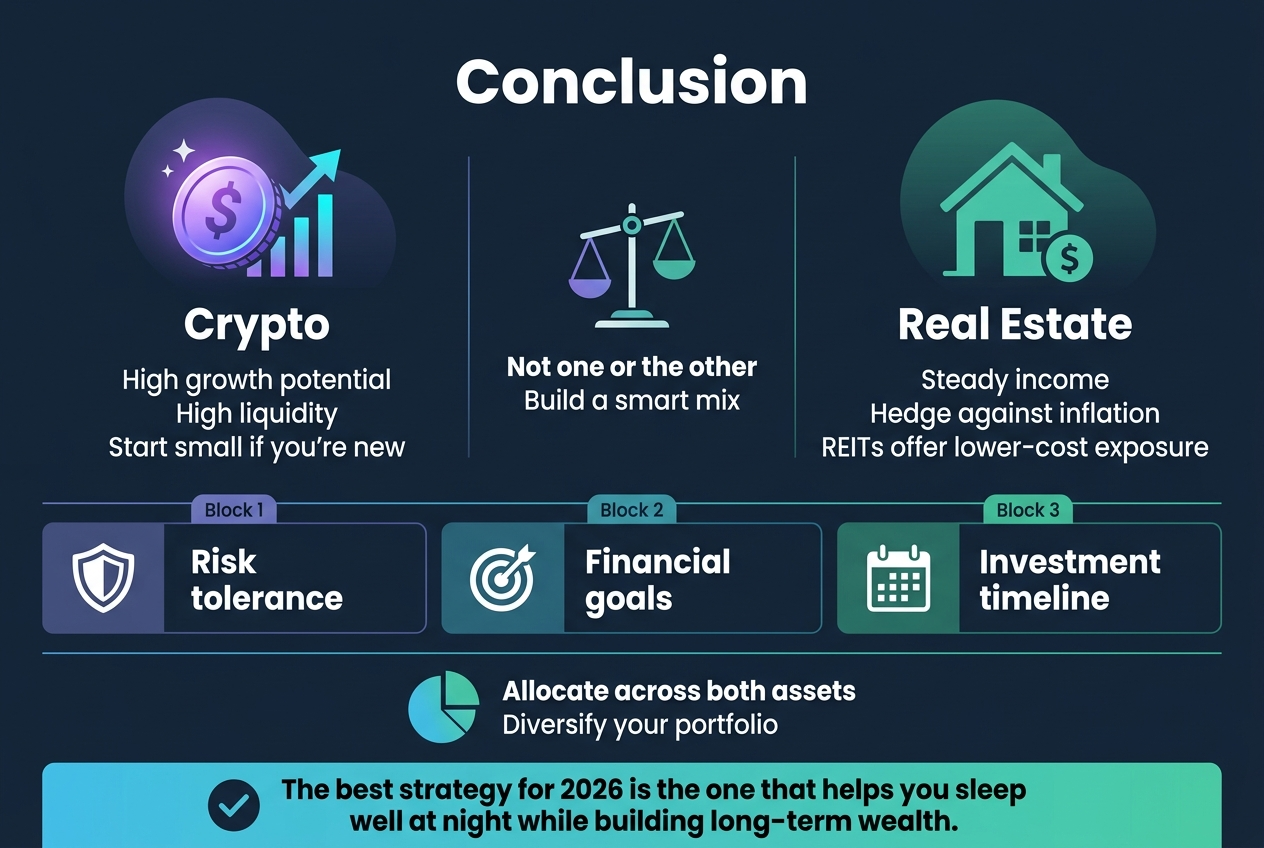
Both crypto and real estate offer compelling investment opportunities, but they serve different purposes in a smart investor’s portfolio. Crypto brings high growth potential and liquidity to the table, while real estate delivers steady income and acts as a hedge against inflation. The key isn’t choosing one over the other – it’s understanding how much risk you can handle and what your financial goals look like.
Smart money doesn’t put all its eggs in one basket. Consider allocating a portion of your portfolio to both assets based on your age, risk tolerance, and investment timeline. Start small with crypto if you’re new to the space, and remember that real estate doesn’t have to mean buying whole properties – REITs can give you exposure with much less capital. The best investment strategy for 2026 is the one that helps you sleep well at night while building long-term wealth.