

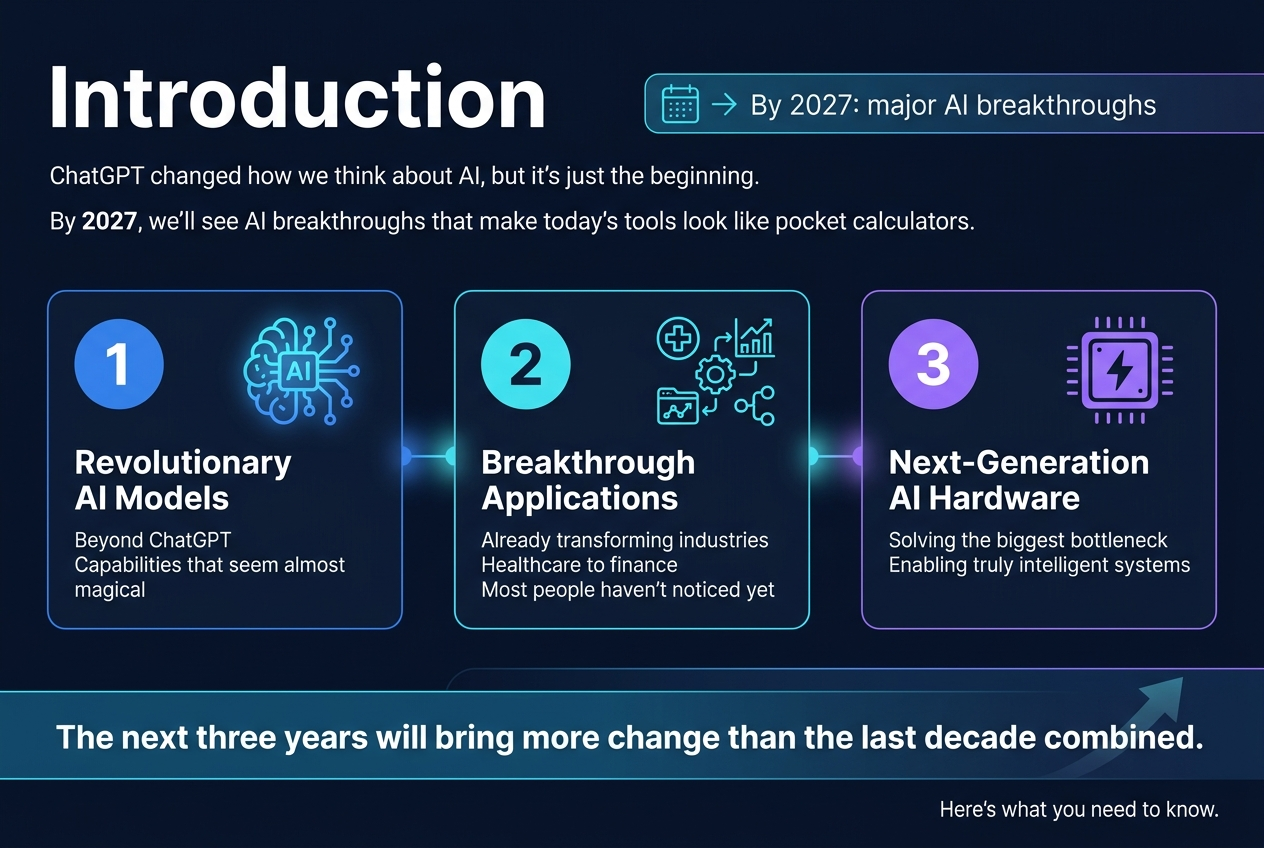
ChatGPT changed how we think about AI, but it’s just the beginning. By 2027, we’ll see AI breakthroughs that make today’s tools look like pocket calculators.
This guide is for business leaders, tech professionals, and anyone curious about what’s coming next in artificial intelligence. You’ll learn how these changes will impact your work and daily life.
We’ll explore three major shifts happening right now. First, revolutionary AI models beyond ChatGPT are being developed with capabilities that seem almost magical. Second, breakthrough applications are already transforming industries from healthcare to finance in ways most people haven’t noticed yet. Third, next-generation AI hardware is solving the biggest bottleneck holding back truly intelligent systems.
The next three years will bring more change than the last decade combined. Here’s what you need to know.
Revolutionary AI Models That Will Replace Current Language Systems
Multimodal AI Integration Combining Text, Voice, and Visual Processing
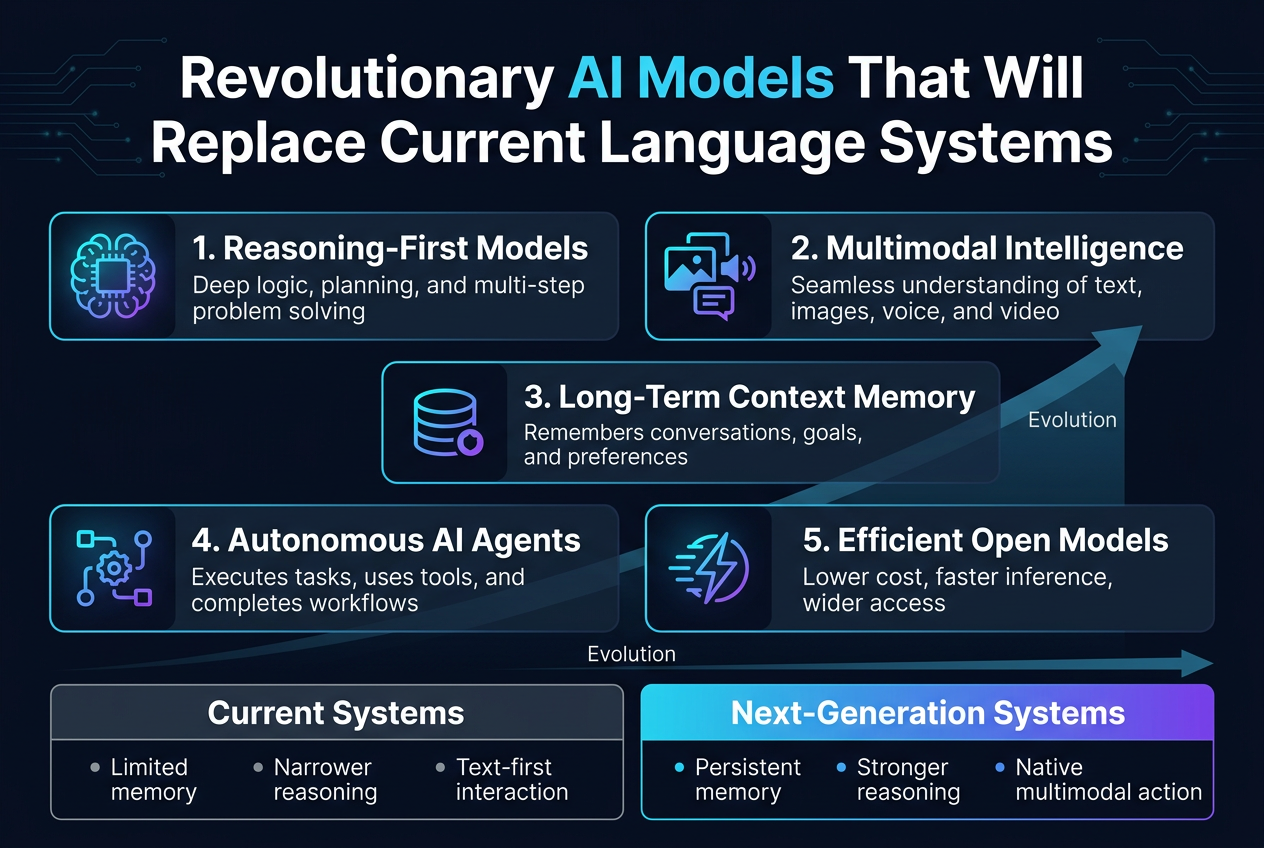
The AI models beyond ChatGPT coming in 2027 will fundamentally change how we interact with artificial intelligence by seamlessly combining multiple forms of communication. Unlike today’s systems that primarily handle text or require separate tools for different media types, these revolutionary AI models will process text, speech, images, and video simultaneously within a single unified framework.
Current language models excel at text generation but struggle when you need them to understand a photo while listening to your voice commands and responding with both visual and audio feedback. The breakthrough AI capabilities emerging by 2027 will eliminate these barriers completely. You’ll be able to show an AI system a broken appliance, describe the problem verbally, and receive step-by-step visual repair instructions along with spoken guidance.
These advanced language models will understand context across all communication channels. When you point to something in a video call while asking questions about a document, the AI will grasp the connection between your gesture, the visual content, and the text you’re referencing. This represents a massive leap from today’s fragmented approach where different AI tools handle different tasks.
The practical applications span every industry. Doctors will discuss patient symptoms while the AI simultaneously analyzes medical images and patient records. Architects will sketch designs while verbally describing requirements, with the AI generating 3D models in real-time. Teachers will create interactive lessons where students can ask questions about any element they see, hear, or read.
Quantum-Enhanced Neural Networks for Exponential Performance Gains
Quantum computing integration represents one of the most significant next generation AI technology developments arriving by 2027. These quantum-enhanced neural networks will deliver processing speeds that make current AI systems look primitive by comparison.
Traditional neural networks process information sequentially, even with parallel processing capabilities. Quantum-enhanced systems leverage quantum superposition and entanglement to explore multiple solution paths simultaneously. This means problems that currently take hours or days to solve will complete in minutes or seconds.
The performance gains extend beyond raw speed. Quantum enhancement enables AI models to identify patterns and relationships in data that classical computers simply cannot detect. These systems will recognize subtle connections across massive datasets that would take conventional AI months to process.
Here’s what quantum-enhanced performance means in practical terms:
| Current AI Capability | Quantum-Enhanced AI Capability |
|---|---|
| Analyze 1,000 medical scans per hour | Analyze 100,000+ medical scans per hour |
| Generate basic code solutions | Create complex software architectures instantly |
| Process simple language translation | Provide real-time multilingual communication |
| Basic pattern recognition | Detect complex multi-dimensional patterns |
Early implementations are already showing promising results in research labs. Drug discovery processes that typically require years of computational analysis are being completed in weeks. Climate modeling simulations that previously demanded supercomputer clusters are running on quantum-enhanced AI systems with unprecedented accuracy.
The energy efficiency gains are equally impressive. While current AI models require massive data centers consuming enormous amounts of power, quantum-enhanced neural networks achieve superior results while using significantly less energy.
Self-Improving AI Systems That Learn Without Human Intervention
The most transformative aspect of AI breakthroughs 2027 involves systems that continuously enhance their own capabilities without requiring human programming or training data updates. These self-improving AI systems represent a fundamental shift from current models that remain static after training.
Current AI models learn during training phases and then deploy with fixed capabilities. Self-improving systems continuously adapt and upgrade their performance based on real-world interactions. They identify their own weaknesses, develop new strategies, and implement improvements automatically.
These systems employ several breakthrough mechanisms:
- Autonomous Knowledge Discovery: The AI actively seeks out new information sources and integrates relevant knowledge into its existing framework
- Self-Diagnostic Optimization: Continuous monitoring of performance metrics with automatic adjustments to improve accuracy and efficiency
- Dynamic Architecture Evolution: The neural network structure itself adapts, adding or modifying pathways as needed
- Collaborative Learning Networks: Multiple AI systems share discoveries and improvements across the entire network
The implications for professional AI tools are staggering. A legal AI assistant will continuously learn new case law, legal precedents, and regulatory changes without requiring manual updates. Medical diagnostic AI will incorporate the latest research findings and treatment protocols as they become available.
Safety mechanisms prevent these systems from evolving in harmful directions. Built-in ethical constraints and goal alignment protocols ensure improvements align with human values and intended purposes. Multiple redundant monitoring systems track changes and can halt problematic developments.
What makes this particularly exciting is the exponential improvement curve. As these systems become better at learning, they become better at improving themselves, creating a positive feedback loop that accelerates development far beyond human-guided training approaches.
By 2027, we’ll see AI models that grow more capable each day, adapting to new challenges and developing novel solutions that their original programmers never anticipated. This represents the beginning of truly autonomous artificial intelligence that enhances human capabilities while maintaining safe and beneficial operation.
Breakthrough Applications Transforming Professional Industries
AI-Powered Scientific Discovery Accelerating Medical Breakthroughs
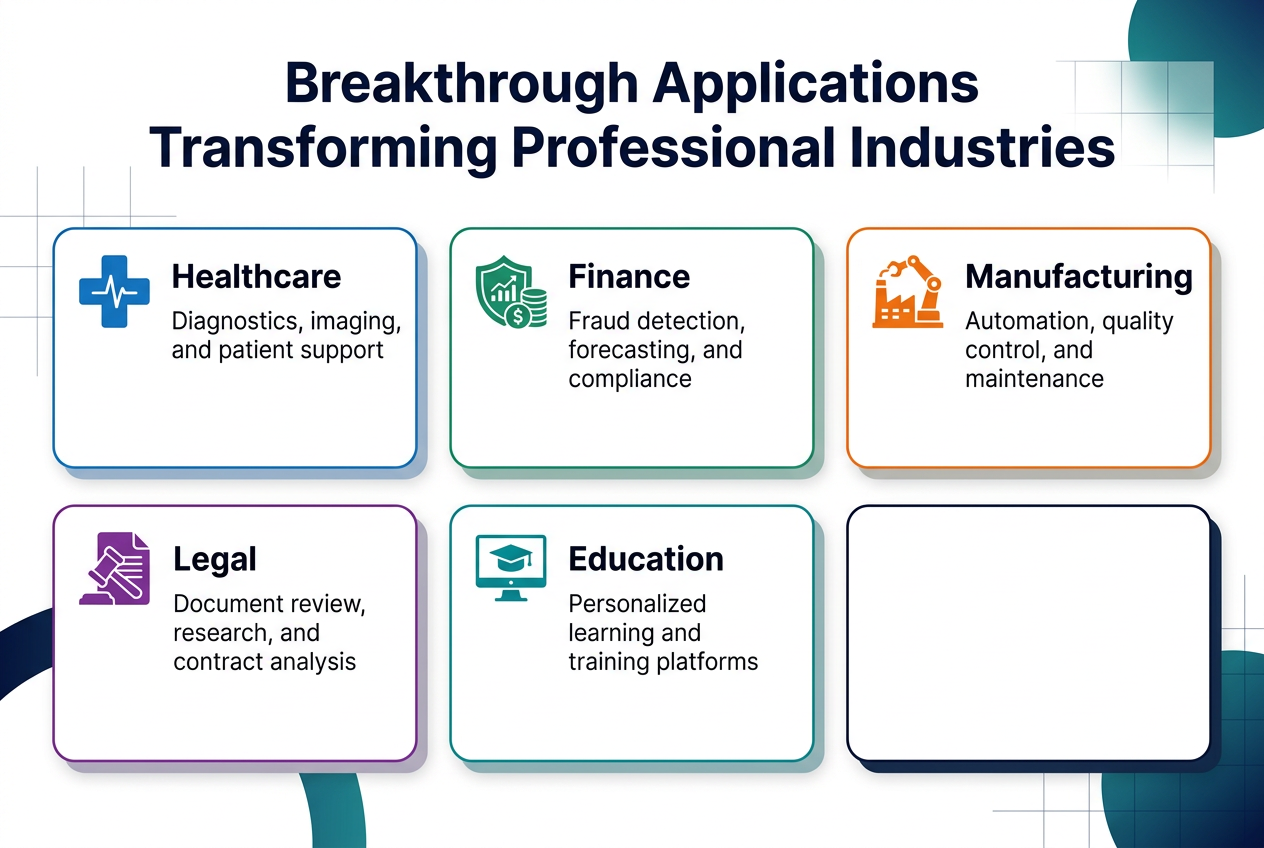
The medical research landscape is about to experience a seismic shift as AI breakthroughs 2027 bring revolutionary AI applications that will dramatically speed up drug discovery and disease understanding. Advanced language models are already showing promise in analyzing complex biological data, but the next generation will operate at a level that makes today’s systems look primitive.
Imagine AI systems that can process millions of research papers, clinical trials, and genetic databases simultaneously while identifying patterns that would take human researchers decades to uncover. These breakthrough AI capabilities will enable scientists to predict how new compounds interact with specific proteins, identify potential side effects before clinical trials begin, and even suggest entirely new treatment approaches based on molecular-level insights.
The pharmaceutical industry will see drug development timelines compress from 10-15 years to potentially 3-5 years. AI models will simulate human biology with unprecedented accuracy, allowing researchers to test thousands of drug combinations virtually before moving to expensive lab work. Cancer research will particularly benefit, with AI identifying personalized treatment protocols based on individual genetic profiles and tumor characteristics.
Real-world applications are already emerging, but the 2027 generation will integrate seamlessly with laboratory equipment, automatically adjusting experiments based on real-time results and suggesting new hypotheses as data streams in. This creates a continuous discovery loop where human creativity guides the process while AI handles the computational heavy lifting.
Autonomous Legal Research and Contract Generation Systems
The legal profession stands on the brink of transformation as next generation AI technology reshapes how lawyers research cases, draft documents, and analyze regulatory compliance. Future artificial intelligence systems will move beyond simple document review to become sophisticated legal reasoning engines capable of understanding complex jurisprudence and regulatory frameworks.
These systems will scan every relevant case law database, statute, and regulation in seconds, then present lawyers with comprehensive analysis including precedent strength, jurisdiction-specific variations, and potential counterarguments. Contract generation will become highly automated, with AI drafting complex agreements while accounting for industry-specific requirements, local regulations, and client preferences.
Legal professionals will interact with AI partners that understand context, nuance, and strategic implications. When preparing for litigation, these systems will analyze opposing counsel’s historical patterns, predict likely arguments, and suggest tactical approaches based on successful cases with similar fact patterns.
The democratization of legal services will accelerate as AI technology trends make sophisticated legal analysis accessible to smaller firms and individual practitioners. Routine legal work like document review, due diligence, and compliance checking will become largely automated, allowing lawyers to focus on strategy, negotiation, and client relationships.
Creative AI Partners for Film, Music, and Literature Production
Creative industries will witness unprecedented collaboration between human artists and revolutionary AI applications that serve as true creative partners rather than mere tools. Next-gen AI hardware will power systems capable of understanding artistic vision, emotional resonance, and cultural context while contributing original ideas that enhance rather than replace human creativity.
In filmmaking, AI will assist with everything from script development to visual effects generation. Directors will work with AI systems that can generate multiple scene variations, suggest camera angles based on emotional beats, and even create preliminary visual effects in real-time during production planning. These systems will understand narrative structure, character development, and genre conventions while offering fresh perspectives that push creative boundaries.
Musicians will collaborate with AI that composes complementary parts, suggests harmonic progressions, and even performs virtual instruments with human-like expression. The technology won’t replace musicians but will expand their creative palette, allowing solo artists to create full orchestral arrangements and helping bands explore musical territories they might never have considered.
Literature will see AI partners that help authors develop plot threads, maintain character consistency across long works, and even suggest dialogue that captures specific voices. These systems will understand literary devices, cultural references, and genre expectations while helping writers overcome creative blocks and explore new narrative possibilities.
Real-Time Language Translation Breaking Down Global Communication Barriers
Language barriers are about to become relics of the past as advanced language models achieve near-perfect real-time translation across hundreds of languages and dialects. The 2027 breakthrough will go far beyond word-for-word conversion to capture cultural nuance, emotional context, and even humor while maintaining the speaker’s personality and intent.
Professional AI tools will enable seamless global business communication through earpieces and smart glasses that provide instant translation without breaking conversation flow. International negotiations, medical consultations with foreign patients, and educational exchanges will proceed as naturally as if everyone shared the same native language.
The technology will excel at preserving cultural context and regional expressions rather than defaulting to generic translations. When someone uses an idiom or cultural reference, the AI will either find an equivalent expression in the target language or provide brief context that maintains the original meaning and emotional impact.
Video calls will feature real-time dubbing that matches lip movements and preserves vocal characteristics, while text-based communication will offer style preservation that maintains the writer’s tone whether formal, casual, or technical. This AI industry transformation will enable global collaboration at unprecedented scales, connecting expertise and perspectives across linguistic boundaries that have historically limited international cooperation.
Next-Generation Hardware Enabling Unprecedented AI Capabilities
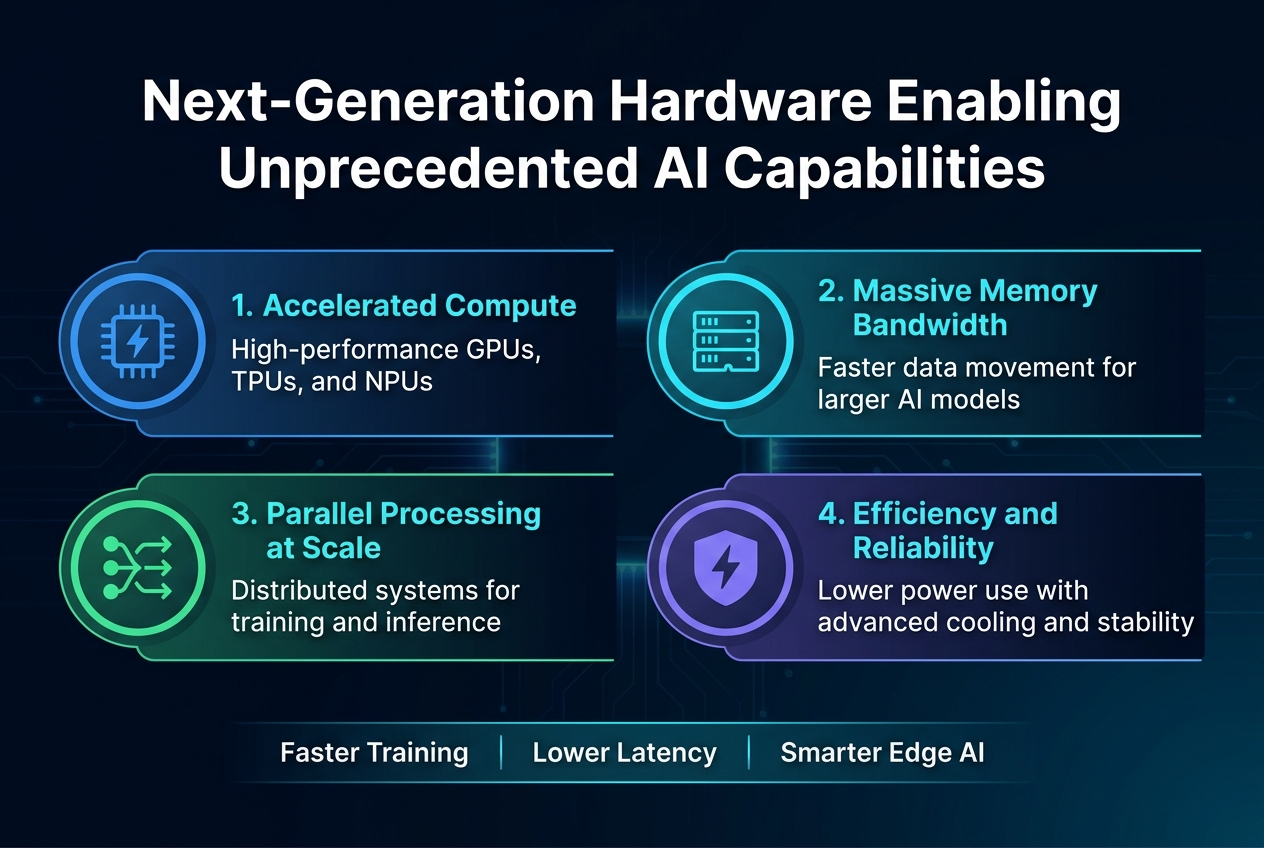
Neuromorphic Chips Mimicking Human Brain Architecture
The race to create brain-inspired computing has reached a tipping point. By 2027, neuromorphic chips will fundamentally change how we approach AI processing. Unlike traditional silicon processors that rely on binary operations, these next-gen AI hardware components mirror the neural networks found in biological brains, processing information through interconnected nodes that can learn and adapt in real-time.
Intel’s Loihi and IBM’s TrueNorth have paved the way, but the breakthroughs coming in 2027 will make these early attempts look primitive. Companies like BrainChip and SynSense are developing chips that can process sensory data with the efficiency of a human brain while consuming a fraction of the power required by conventional processors.
These neuromorphic processors excel at pattern recognition, decision-making under uncertainty, and continuous learning without requiring massive datasets. Picture an AI system that can recognize your voice after hearing it just once, or a security camera that learns to distinguish between a family pet and an intruder without months of training data.
The energy efficiency gains are staggering. While current AI models like ChatGPT require enormous data centers consuming megawatts of power, neuromorphic chips operate on milliwatts – similar to the human brain’s 20-watt consumption. This efficiency breakthrough enables AI breakthroughs 2027 that seemed impossible just years ago.
Edge AI Processing Bringing Intelligence to Everyday Devices
Your smartphone, car, and even your refrigerator are about to become remarkably smarter. Edge AI processing eliminates the need for constant cloud connectivity, bringing sophisticated AI capabilities directly to devices where data is generated and decisions need to be made instantly.
Apple’s Neural Engine and Google’s Tensor chips hint at what’s coming, but 2027’s edge processors will pack the computational power of today’s data centers into chip-sized packages. These breakthrough AI capabilities mean your devices will understand context, anticipate needs, and make complex decisions without sending personal data to remote servers.
Consider these revolutionary applications:
- Smart vehicles that process traffic patterns, weather conditions, and driver behavior in real-time without cellular connectivity
- Medical devices that detect health anomalies and provide immediate feedback during emergencies
- Home automation systems that learn family routines and optimize energy usage while maintaining privacy
- Manufacturing equipment that predicts maintenance needs and adjusts operations autonomously
The privacy implications are enormous. Instead of uploading photos to identify objects or voices to transcribe speech, everything happens locally. Your personal data never leaves your device, yet you still get AI capabilities that rival cloud-based services.
Distributed Computing Networks Creating Global AI Consciousness
The most ambitious breakthrough coming by 2027 involves connecting individual AI systems into vast, distributed networks that share knowledge and processing power. Think of it as creating a global brain where each device contributes computational resources while benefiting from collective intelligence.
Blockchain technology and federated learning make this possible. Instead of centralized AI models controlled by tech giants, we’re moving toward decentralized networks where smartphones, laptops, IoT devices, and edge processors work together. Each device contributes spare processing cycles while learning from shared experiences without exposing raw data.
This distributed approach solves several critical challenges facing future artificial intelligence:
| Challenge | Distributed Solution |
|---|---|
| Data Privacy | Local processing with shared insights only |
| Computational Limits | Pooled resources across millions of devices |
| Single Points of Failure | Redundancy across global network |
| Access Inequality | Democratized AI capabilities |
Imagine a network where your phone’s camera contributes to traffic pattern analysis while benefiting from weather prediction models running on smart city infrastructure. Or medical devices sharing anonymous diagnostic insights to improve healthcare globally while keeping patient data completely private.
These distributed networks create emergent intelligence that’s greater than the sum of their parts. As more devices join the network, the collective AI becomes smarter, faster, and more capable of solving complex problems that individual systems couldn’t handle alone.
The breakthrough AI capabilities emerging from these distributed networks will enable real-time global coordination for climate monitoring, disaster response, and resource optimization on a planetary scale.
Personalized AI Assistants Revolutionizing Daily Life
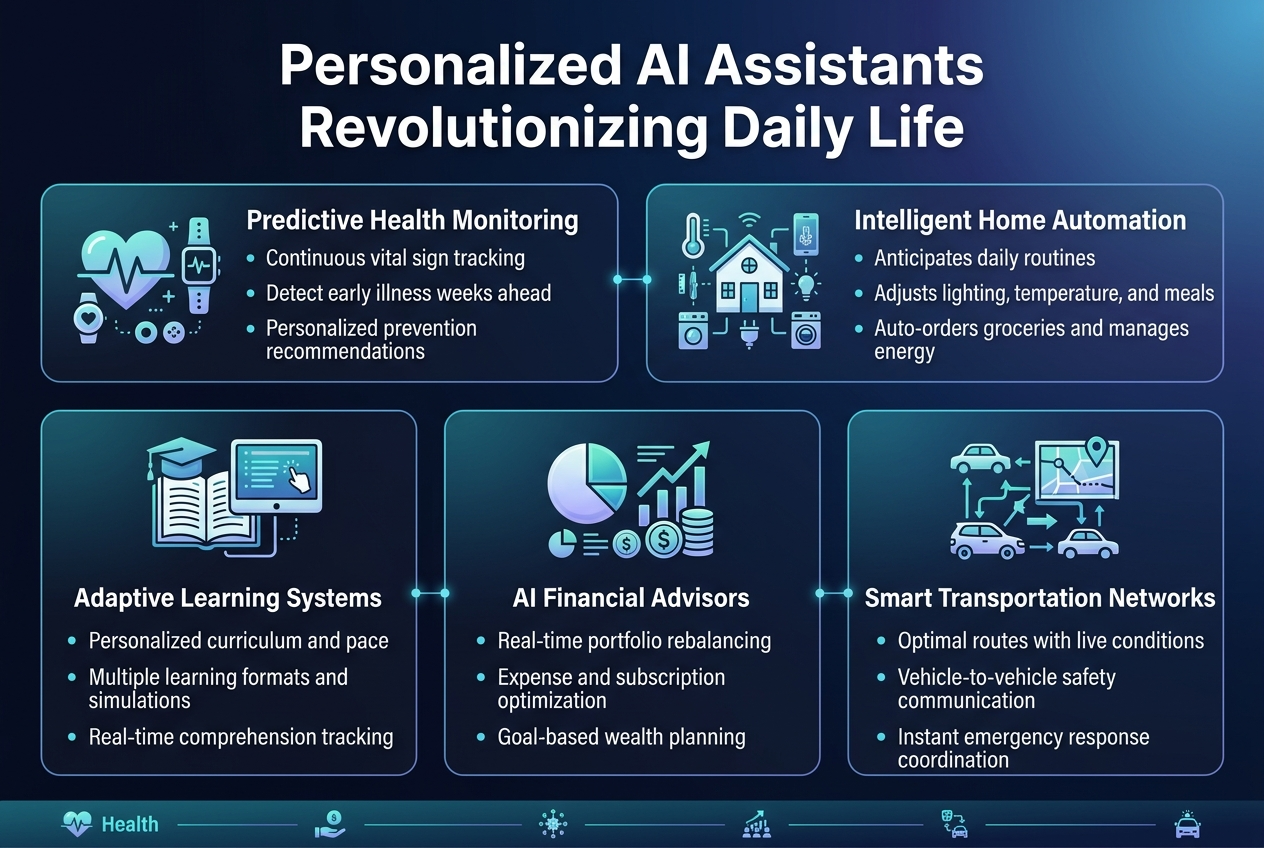
Predictive Health Monitoring and Preventive Care Recommendations
Your personalized AI assistants will transform healthcare by continuously monitoring your vital signs through smart wearables and environmental sensors embedded throughout your living space. These systems go far beyond today’s fitness trackers, analyzing thousands of biomarkers in real-time to detect early warning signs of illness weeks or even months before symptoms appear.
Advanced AI technology trends enable these assistants to learn your unique biological patterns, identifying subtle deviations that indicate potential health issues. When your assistant detects irregular heart rhythms during sleep or notices changes in your voice patterns that suggest respiratory problems, it immediately schedules preventive appointments with the right specialists and adjusts your daily routine to minimize health risks.
The integration of genetic data, lifestyle patterns, and environmental factors allows these AI systems to create highly personalized prevention strategies. Your assistant might recommend specific nutrition adjustments based on your genetic predisposition to diabetes, or suggest stress-reduction techniques when cortisol patterns indicate burnout risk.
Intelligent Home Automation Anticipating Your Every Need
Smart homes in 2027 will feature next generation AI technology that learns from your behavioral patterns to create seamlessly automated living environments. These systems don’t just respond to voice commands—they anticipate your needs before you even realize them.
Your AI assistant analyzes data from motion sensors, smart appliances, and even your calendar to predict your daily routines with remarkable accuracy. When you typically arrive home from work, the system automatically adjusts lighting to your preferred evening settings, starts meal preparation based on your dietary preferences and scheduled activities, and sets the perfect temperature based on weather conditions and your comfort patterns.
The revolutionary AI applications extend to inventory management, where your assistant tracks consumption patterns and automatically orders groceries, household supplies, and medications before you run out. Advanced machine learning algorithms consider seasonal preferences, upcoming events, and health goals when making these decisions.
Energy optimization becomes effortless as your AI assistant coordinates with smart grid systems to reduce utility costs while maintaining comfort. The system learns when you use different appliances and shifts energy-intensive tasks to off-peak hours automatically.
Adaptive Learning Systems Customizing Education for Individual Success
Educational AI assistants will revolutionize learning by creating completely personalized curricula that adapt to each student’s cognitive strengths, learning pace, and interests. These breakthrough AI capabilities analyze how individual brains process different types of information and adjust teaching methods accordingly.
Students struggling with traditional text-based learning might receive the same concepts through interactive simulations, visual storytelling, or hands-on virtual experiments. The AI continuously monitors comprehension levels through eye tracking, response patterns, and engagement metrics to optimize the learning experience in real-time.
These systems also identify knowledge gaps that traditional testing might miss, providing targeted micro-lessons to fill these gaps before they become learning obstacles. Advanced natural language processing allows students to ask questions in conversational language and receive explanations tailored to their current understanding level.
AI Financial Advisors Optimizing Personal Wealth Management
AI predictions 2027 point to sophisticated financial assistants that provide institutional-quality investment advice to individual users. These systems analyze global market trends, personal spending patterns, and life goals to create dynamic financial strategies that adjust automatically to changing circumstances.
Your AI financial advisor monitors thousands of economic indicators, news sources, and market movements to rebalance your portfolio in real-time. When the system detects potential market volatility that could affect your retirement timeline, it proactively suggests adjustments to protect your long-term goals.
Expense optimization becomes effortless as your assistant identifies subscription services you rarely use, negotiates better rates with service providers, and finds cost-saving opportunities aligned with your lifestyle preferences.
Smart Transportation Networks Eliminating Traffic and Accidents
Connected vehicle networks powered by advanced language models and predictive analytics will coordinate traffic flow with unprecedented precision. Your AI assistant communicates with city-wide transportation systems to plan optimal routes that consider real-time traffic, weather conditions, and even your stress levels.
These systems virtually eliminate accidents through vehicle-to-vehicle communication, where cars share sensor data to predict and prevent collision scenarios milliseconds before they occur. Emergency response coordination becomes instantaneous, with AI systems automatically dispatching appropriate services and clearing optimal routes for first responders.
Ethical AI Frameworks Ensuring Safe and Beneficial Development
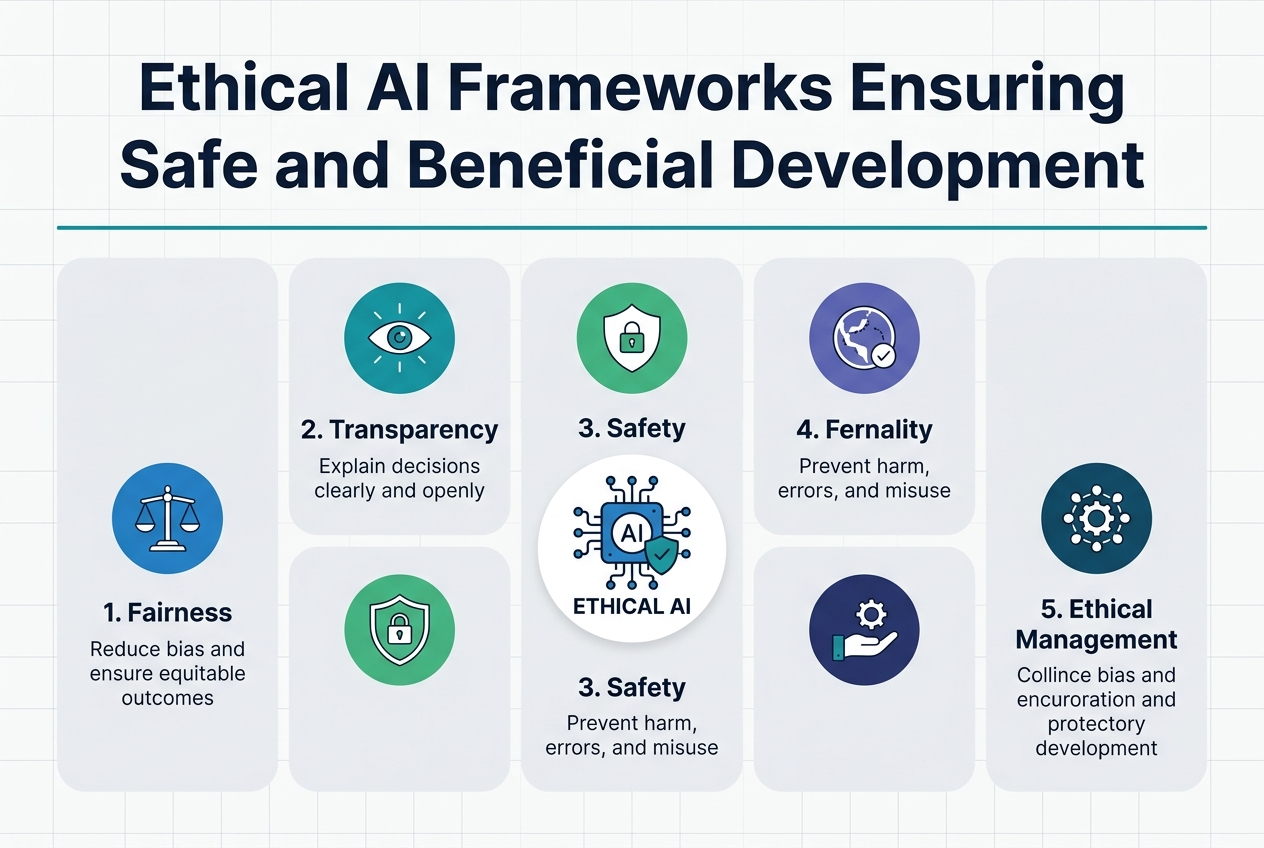
Transparent AI Decision-Making Systems Building Public Trust
The black box problem plaguing today’s AI systems becomes obsolete by 2027 as breakthrough AI capabilities emerge with built-in explainability. These next generation AI technology systems won’t just provide answers—they’ll show their work step by step, similar to how humans explain their reasoning process.
Major tech companies are developing AI models that automatically generate clear explanations for every decision they make. When an AI system approves a loan application or diagnoses a medical condition, it will present a detailed breakdown of factors considered, weighted importance of each element, and alternative scenarios explored. This radical shift addresses the growing demand for accountability in artificial intelligence applications.
Advanced visualization tools accompany these transparent systems, transforming complex algorithmic processes into intuitive graphics that anyone can understand. Real-time decision trees, probability maps, and interactive flowcharts make AI reasoning accessible to non-technical users. Healthcare professionals, financial advisors, and legal experts can now trace exactly how AI recommendations align with their expertise.
Privacy-Preserving Technologies Protecting Personal Data
Federated learning revolutionizes how AI models train without compromising personal information. Instead of collecting data in centralized servers, these breakthrough AI capabilities allow models to learn directly on user devices while keeping sensitive information local. The AI gains intelligence without ever seeing raw personal data.
Homomorphic encryption takes privacy protection even further, enabling AI systems to perform computations on encrypted data without decrypting it. Banks can analyze spending patterns for fraud detection while customer transaction details remain completely hidden. Healthcare AI can identify disease trends across populations without accessing individual patient records.
Differential privacy mechanisms inject calculated noise into datasets, making it mathematically impossible to identify individual contributors while preserving overall patterns. These techniques ensure that even if someone gains access to training data, they can’t reverse-engineer personal information.
| Privacy Technology | Protection Level | Use Case Examples |
|---|---|---|
| Federated Learning | Device-level | Personal assistants, health monitoring |
| Homomorphic Encryption | Mathematical guarantee | Financial analysis, medical research |
| Differential Privacy | Statistical protection | Census data, market research |
AI Governance Models Preventing Harmful Applications
Multi-stakeholder governance councils emerge as the standard for overseeing ethical AI development across industries. These bodies include technologists, ethicists, legal experts, and community representatives who collectively establish boundaries for acceptable AI behavior. Rather than top-down regulation, this collaborative approach creates flexible frameworks that adapt to rapidly evolving technology.
Real-time monitoring systems continuously scan AI outputs for potential harm indicators. These guardian algorithms detect bias patterns, misinformation spread, and manipulation attempts before they impact users. When concerning patterns emerge, automatic circuit breakers pause system operation until human reviewers can investigate.
International AI safety standards create unified global protocols for testing and deploying advanced AI systems. Similar to aviation safety regulations, these frameworks establish mandatory testing phases, certification requirements, and incident reporting procedures. Companies developing revolutionary AI applications must demonstrate compliance before public release.
Human-AI Collaboration Standards Maintaining Human Agency
Augmentation-first design principles ensure AI systems enhance human capabilities rather than replace human judgment. These standards mandate that AI recommendations include confidence levels, highlight areas of uncertainty, and always provide options for human override. Critical decisions in healthcare, law enforcement, and education require explicit human approval.
Skill preservation protocols prevent AI dependency by maintaining human expertise in essential domains. Professional training programs integrate AI tools while ensuring practitioners retain core competencies. Surgeons learn to work with AI diagnostic systems while maintaining surgical skills. Teachers use AI tutoring assistants while preserving their ability to connect with students.
Algorithmic auditing becomes mandatory for AI systems affecting human welfare. Independent third parties regularly test these systems for fairness, accuracy, and alignment with human values. Audit results are publicly available, creating market incentives for ethical AI development. Organizations deploying biased or harmful AI systems face significant reputational and financial consequences.
These human-AI collaboration standards recognize that the most powerful AI breakthroughs 2027 will come from partnerships between human creativity and machine intelligence, not from replacing one with the other.
The AI landscape is about to shift dramatically as we approach 2027. New language models will make today’s ChatGPT look like an early prototype, while specialized hardware will unlock capabilities we can barely imagine right now. These advances won’t just happen in tech labs – they’ll reshape how doctors diagnose patients, how lawyers research cases, and how teachers create personalized learning experiences for every student.
What makes this transformation truly exciting is how personal it’s becoming. Your AI assistant won’t just answer questions – it’ll understand your work style, anticipate your needs, and adapt to your daily routine in ways that feel genuinely helpful rather than intrusive. The companies leading this charge are also taking ethics seriously, building safety measures and fairness protocols right into the foundation of these systems. If you work in any field that involves information, creativity, or decision-making, now’s the time to start exploring how AI might enhance what you do best.