

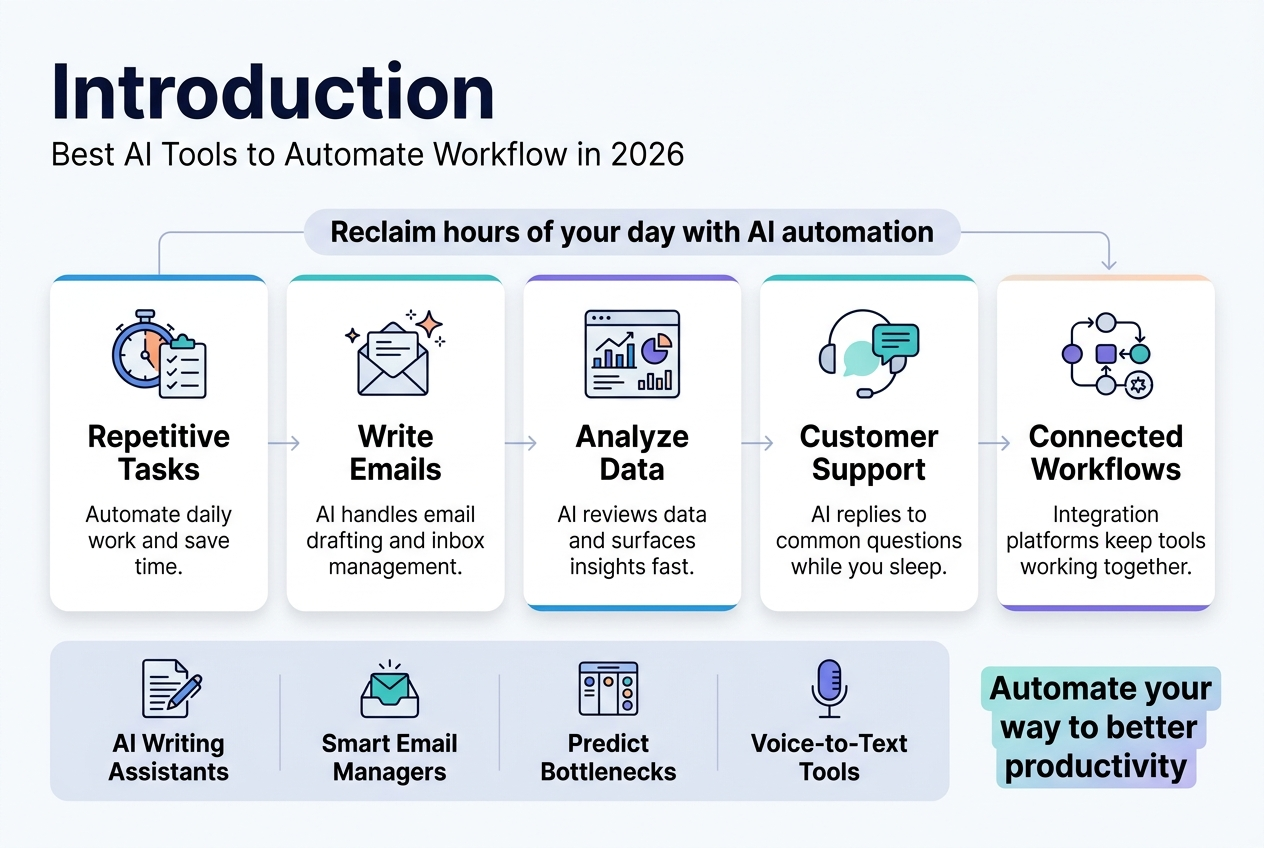
Drowning in repetitive tasks and juggling multiple workflows? You’re not alone. Business owners, remote workers, and productivity enthusiasts are turning to the best AI tools to automate workflow in 2026 to reclaim hours of their day and focus on what actually matters.
The latest AI tools for productivity and automation go far beyond simple task scheduling. They’re smart enough to write your emails, analyze your data, and even handle customer support while you sleep. These tools don’t just save time – they transform how you work.
This guide covers the top AI workflow automation tools 2026 that deliver real results. We’ll dive into AI writing assistants that craft content in minutes, smart email managers that clear your inbox automatically, and project management platforms that predict bottlenecks before they happen. You’ll also discover how voice-to-text tools are changing the game for busy professionals and why integration platforms are becoming the backbone of efficient businesses.
Ready to automate your way to better productivity? Let’s explore the tools that are actually worth your time and money.
AI Writing and Content Creation Tools That Save Hours Daily
Automated Blog Post Generation with Smart Templates
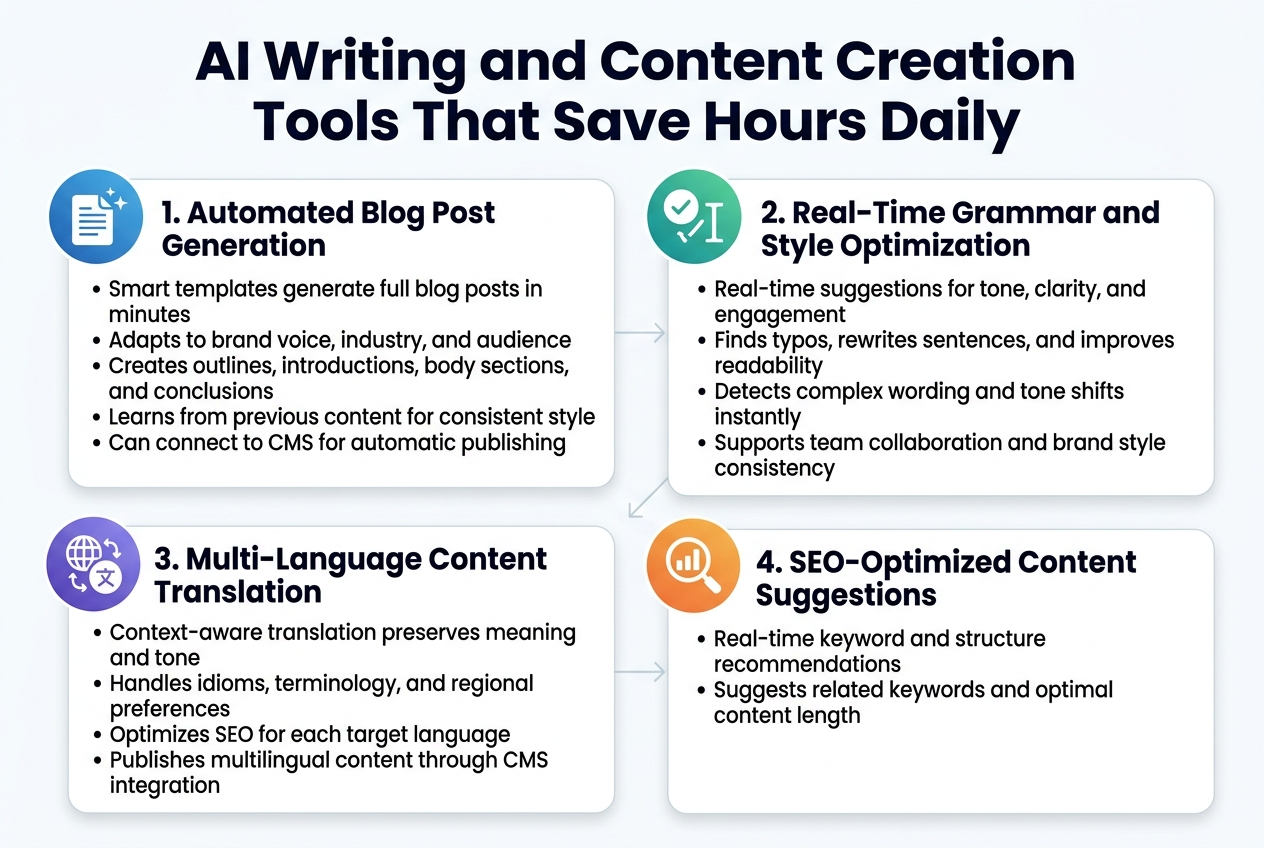
Content creation has evolved dramatically, and the best AI tools to automate workflow in 2026 have transformed how businesses approach writing. Modern AI platforms like Jasper, Copy.ai, and Writesonic offer sophisticated template systems that generate complete blog posts in minutes rather than hours.
These smart templates adapt to your brand voice, industry specifics, and target audience preferences. You can input a simple topic or keyword phrase, and the AI produces comprehensive outlines, introductions, body sections, and conclusions. The technology has advanced beyond basic content spinning to create genuinely valuable, readable content that requires minimal human editing.
What makes these tools exceptional is their ability to learn from your previous content. They analyze your writing style, preferred terminology, and structural patterns to maintain consistency across all generated pieces. Some platforms even integrate with your content management system, automatically publishing posts according to your schedule.
Real-Time Grammar and Style Optimization
Grammar checking has moved far beyond simple spell-check functionality. AI productivity tools for remote work now include sophisticated writing assistants that provide real-time suggestions for tone, clarity, and engagement.
Grammarly Business, ProWritingAid, and Hemingway Editor have integrated advanced machine learning algorithms that understand context, audience, and purpose. These tools don’t just catch typos—they recommend sentence restructuring for better flow, suggest stronger vocabulary choices, and flag potential readability issues.
The real-time aspect is game-changing for productivity. As you type, these tools continuously analyze your content, offering instant improvements without interrupting your creative flow. They can detect when your writing becomes too complex for your target audience or when your tone shifts unexpectedly.
Many platforms now offer team collaboration features, allowing multiple writers to benefit from consistent style guidelines and brand voice requirements across all content pieces.
Multi-Language Content Translation Capabilities
Global businesses need content that resonates across different markets, and AI workflow tools for small businesses now include powerful translation capabilities that go beyond basic language conversion.
DeepL, Google Translate’s business solutions, and specialized platforms like Lokalise offer context-aware translations that preserve meaning, tone, and cultural nuances. These tools understand idiomatic expressions, industry-specific terminology, and regional preferences.
The most advanced systems can translate entire content libraries while maintaining SEO optimization for each target language. They automatically adjust keyword density, meta descriptions, and headers to match local search patterns and user behavior.
Some platforms integrate directly with content management systems, allowing you to publish multilingual versions simultaneously. This capability is particularly valuable for e-commerce businesses and global marketing campaigns where time-to-market is critical.
SEO-Optimized Content Suggestions
Top AI workflow automation tools 2026 have revolutionized how content creators approach search engine optimization. Instead of manually researching keywords and optimizing content after writing, AI tools now provide real-time SEO guidance during the creation process.
Platforms like Surfer SEO, MarketMuse, and Clearscope analyze top-ranking content for your target keywords and provide specific recommendations for improving your content’s search performance. They suggest related keywords, optimal content length, and structural improvements based on current search engine algorithms.
These tools monitor search trends and algorithm updates, automatically adjusting their recommendations to maintain your content’s competitive edge. They can identify content gaps in your existing library and suggest new topics that align with your audience’s search behavior.
| Feature | Benefit | Time Saved |
|---|---|---|
| Keyword density analysis | Optimal search ranking | 2-3 hours per post |
| Content gap identification | Strategic topic planning | 5-10 hours per month |
| Competitor content analysis | Market positioning | 4-6 hours per article |
| Real-time optimization suggestions | Improved search visibility | 1-2 hours per post |
The integration capabilities of these AI tools for business productivity 2026 allow them to work seamlessly with your existing content workflow, from initial research through publication and performance tracking.
Smart Email Management and Communication Assistants
Automated Email Sorting and Priority Filtering
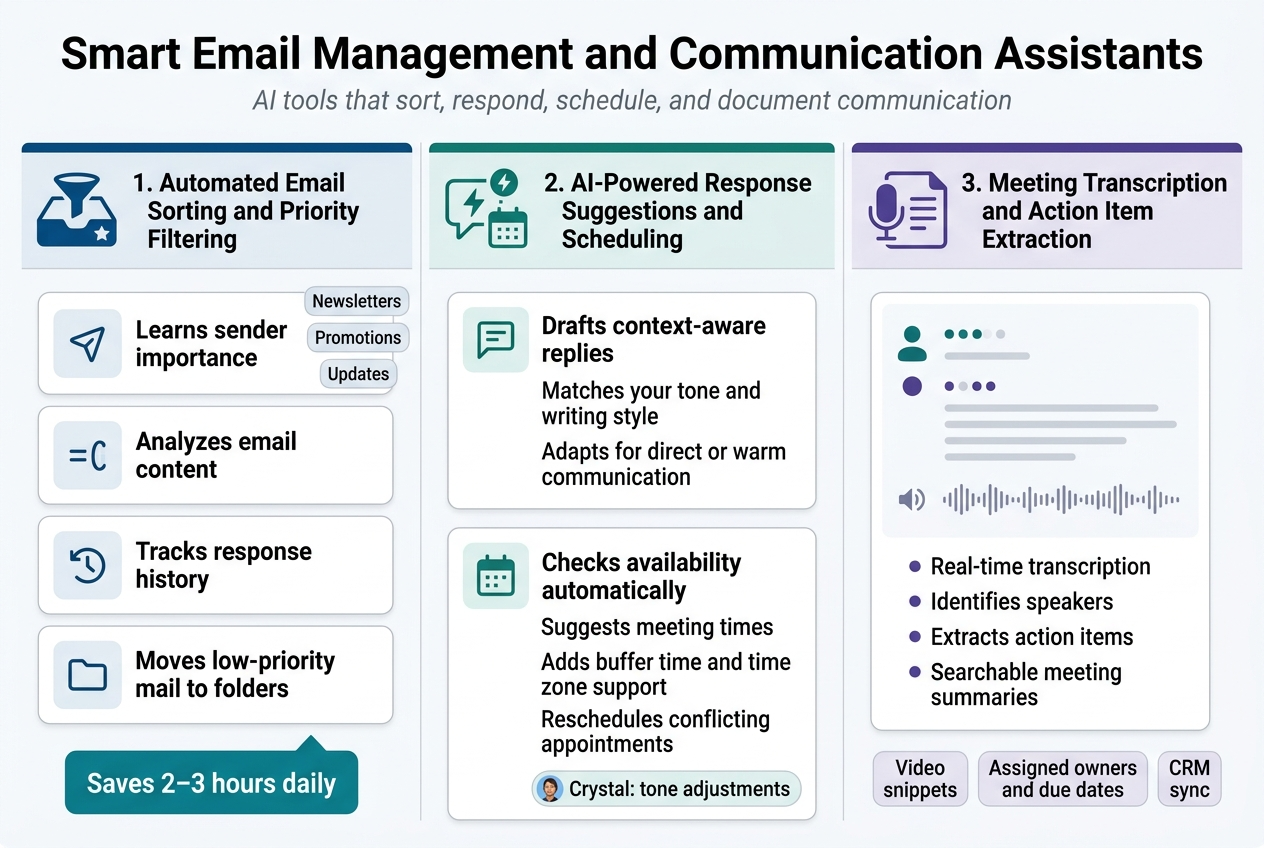
Managing hundreds of emails every day can drain your energy and kill productivity. Smart email assistants powered by AI are changing the game by learning your communication patterns and automatically organizing your inbox. These AI tools for productivity and automation analyze sender importance, email content, and your response history to create intelligent filing systems.
Gmail’s Priority Inbox and Microsoft’s Focused Inbox represent early versions of this technology, but specialized tools like SaneBox and EmailTree take automation to the next level. SaneBox monitors your email behavior for weeks, then starts moving less important messages to designated folders while keeping crucial communications front and center. The system gets smarter over time, recognizing newsletter subscriptions, promotional content, and low-priority updates.
EmailTree goes beyond basic sorting by understanding email context and urgency. It can identify contract deadlines, customer complaints, and time-sensitive requests, automatically flagging them for immediate attention. The platform integrates with your existing email client and learns from corrections, becoming more accurate with each interaction.
Advanced filtering systems now handle complex scenarios like identifying emails from new prospects versus existing clients, separating internal communications from external correspondence, and even detecting emotional tone to prioritize messages that might need diplomatic responses. These AI workflow automation tools 2026 save professionals 2-3 hours daily by eliminating manual inbox management.
AI-Powered Response Suggestions and Scheduling
Writing emails eats up massive chunks of your workday, especially when dealing with routine communications. AI writing assistants have evolved far beyond simple grammar checking to offer contextually relevant response suggestions that match your communication style and tone.
Google’s Smart Reply feature started this revolution, but tools like Grammarly Go, Copy.ai, and Jasper now generate complete email responses based on the incoming message content and your personal writing patterns. These systems analyze your sent emails to understand your communication preferences, then craft responses that sound authentically like you.
Scheduling intelligence represents another breakthrough in email automation. Tools like Calendly, Acuity, and Motion integrate directly with your email to handle meeting coordination without back-and-forth exchanges. When someone requests a meeting, these platforms automatically check your availability, suggest optimal times, and even reschedule conflicting appointments based on priority settings.
The latest AI apps to improve productivity at work include features like time zone detection, meeting duration estimation, and automatic buffer time insertion between appointments. Some platforms can even analyze email threads to determine meeting urgency and participant importance, then suggest scheduling priorities accordingly.
Crystal uses personality AI to analyze recipients’ communication styles and suggest message tone adjustments. If you’re emailing someone who prefers direct communication, it recommends concise language. For relationship-focused contacts, it suggests warmer, more collaborative phrasing.
Meeting Transcription and Action Item Extraction
Virtual meetings have become the backbone of modern business communication, but keeping track of decisions, commitments, and next steps remains challenging. AI tools for business productivity 2026 now handle complete meeting documentation automatically, transforming audio into searchable transcripts with identified speakers and extracted action items.
Otter.ai leads this space by providing real-time transcription during meetings while simultaneously identifying key moments like decisions, questions, and assigned tasks. The platform integrates with Zoom, Microsoft Teams, and Google Meet, creating detailed summaries within minutes of meeting completion. Users can search through months of meeting transcripts using keywords, making it easy to find specific discussions or commitments.
Grain takes meeting intelligence further by creating video snippets of important moments and automatically sharing them with relevant team members. The platform recognizes when someone commits to a deadline, asks for follow-up information, or makes important announcements, then creates shareable clips for future reference.
Notion AI and Monday.com now include meeting analysis features that extract action items and automatically create project tasks with assigned owners and due dates. These systems can identify who committed to what during discussions and create accountability tracking without manual input.
The most sophisticated platforms like Fireflies.ai and Rev.ai offer sentiment analysis, identifying when discussions become heated or when team members seem disengaged. This emotional intelligence helps managers understand team dynamics and address potential issues before they impact productivity.
Advanced transcription tools now handle multiple languages, technical jargon, and industry-specific terminology with impressive accuracy. They can distinguish between similar-sounding words based on context and even identify when someone is being sarcastic or uncertain about their commitments.
Advanced Project Management and Task Automation Platforms
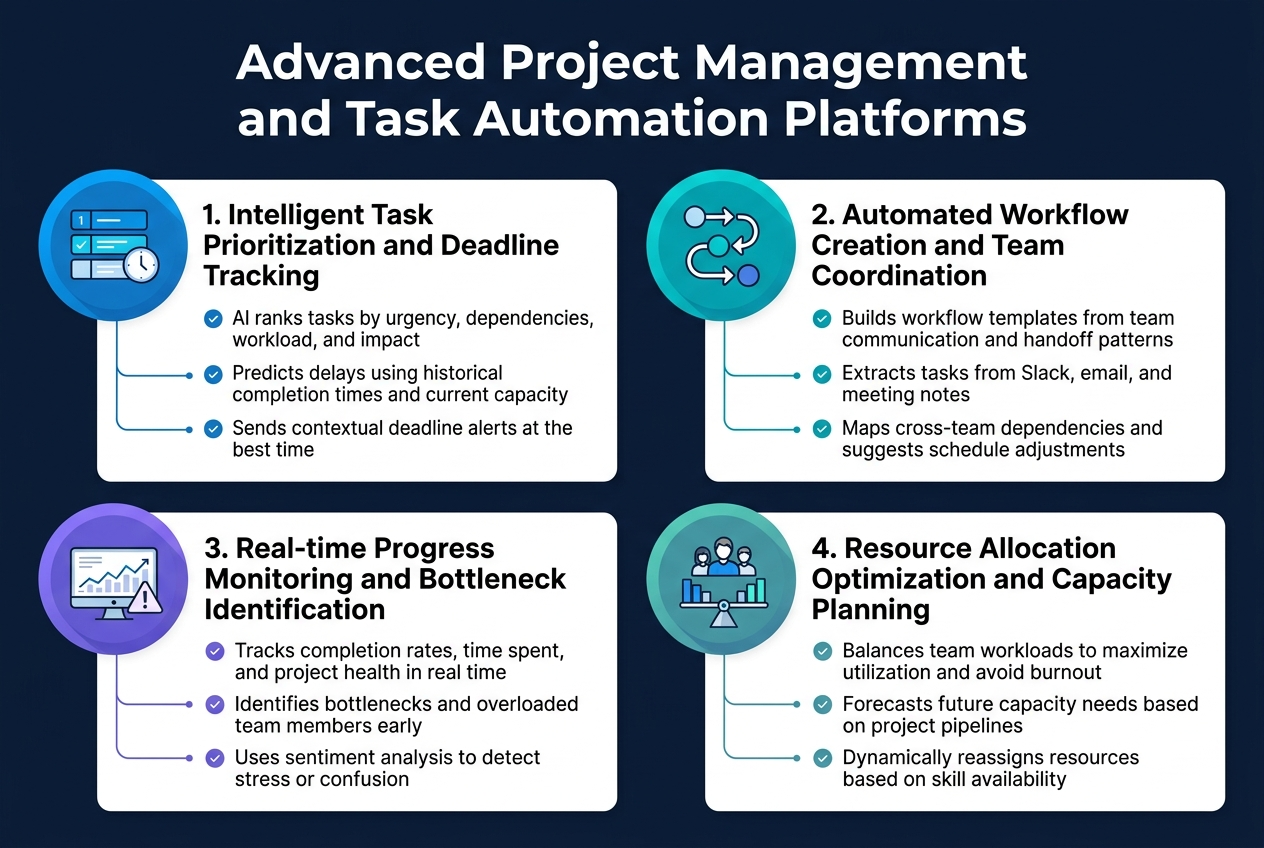
Intelligent Task Prioritization and Deadline Tracking
Modern AI-powered project management platforms have transformed how teams handle task prioritization through sophisticated algorithms that analyze multiple variables simultaneously. These AI tools for productivity and automation examine factors like deadline urgency, resource availability, task dependencies, and team member workloads to automatically rank tasks by importance and impact.
Platforms like Monday.com’s AI Work Management and ClickUp Brain use machine learning to continuously refine their understanding of your team’s patterns. They track which tasks typically take longer than estimated, identify team members who consistently deliver early, and spot recurring bottlenecks. This data feeds into intelligent priority scoring systems that adapt to your team’s unique working style.
The deadline tracking capabilities go beyond simple calendar reminders. AI algorithms predict potential delays before they happen by analyzing historical completion times, current workload distributions, and external dependencies. When a project shows early warning signs of running late, these systems automatically suggest deadline adjustments or resource reallocation options.
Smart notification systems prevent deadline chaos by sending contextual alerts at optimal times. Instead of bombarding everyone with constant reminders, AI determines the best moment to notify each team member based on their work patterns, current focus time, and the urgency level of upcoming deadlines.
Automated Workflow Creation and Team Coordination
Top AI workflow automation tools 2026 excel at creating intelligent workflows that adapt to changing project requirements without manual intervention. These systems observe how your team naturally works together and automatically generate workflow templates that match those patterns.
Advanced platforms like Asana Intelligence and Notion AI can analyze communication patterns, file sharing habits, and task handoff sequences to build workflows that feel intuitive rather than forced. They identify the optimal sequence for task completion, determine which team members should be involved at each stage, and create automatic triggers that move projects forward seamlessly.
The coordination features leverage natural language processing to understand project updates in Slack messages, email threads, and meeting notes. AI extracts actionable items from these communications and automatically creates tasks, assigns them to appropriate team members, and sets realistic deadlines based on current workloads.
Cross-team coordination becomes effortless when AI systems map out dependencies between different departments. They can predict when delays in one team will impact others and proactively suggest schedule adjustments or alternative approaches to keep overall project timelines on track.
Real-time Progress Monitoring and Bottleneck Identification
AI productivity tools for remote work shine in their ability to provide real-time visibility into project health without requiring constant check-ins or status meetings. Machine learning algorithms continuously analyze task completion rates, time spent on different activities, and communication frequency to generate accurate progress assessments.
These systems create visual dashboards that highlight potential problems before they become critical issues. They track velocity trends, identify tasks that consistently take longer than expected, and spot team members who might be overloaded. The AI can differentiate between normal project fluctuations and genuine warning signs that require attention.
Bottleneck identification happens through pattern recognition across multiple data streams. AI analyzes task dependencies, resource allocation, and historical completion times to pinpoint exactly where projects typically slow down. It can predict capacity constraints weeks in advance and suggest proactive measures to prevent delays.
Advanced monitoring includes sentiment analysis of team communications to gauge morale and engagement levels. When AI detects signs of team stress or confusion in chat messages and comments, it can alert project managers to potential soft skill issues that might impact project delivery.
Smart Resource Allocation and Workload Balancing
AI tools for business productivity 2026 revolutionize resource management by continuously optimizing team assignments based on skills, availability, and project requirements. These platforms maintain detailed profiles of each team member’s strengths, preferred working styles, and current capacity levels.
The allocation algorithms consider multiple factors simultaneously: technical expertise required, deadline pressures, team member learning goals, and collaboration preferences. AI can suggest optimal team compositions for new projects by analyzing which combinations of people have historically produced the best results.
Workload balancing happens dynamically throughout project lifecycles. When someone gets overwhelmed, AI automatically identifies tasks that could be redistributed and suggests the most qualified available team members to take them on. The system considers not just current workload but also upcoming commitments and personal working patterns.
Best AI software for task automation includes predictive capacity planning that helps managers make informed decisions about new project timelines. By analyzing historical productivity data and current commitments, these tools can accurately forecast when teams will have bandwidth for additional work and what realistic delivery timelines look like.
Smart resource allocation extends to budget and tool management, with AI tracking resource costs, identifying underutilized assets, and suggesting optimizations that improve both efficiency and cost-effectiveness across entire project portfolios.
AI-Powered Data Analysis and Reporting Solutions
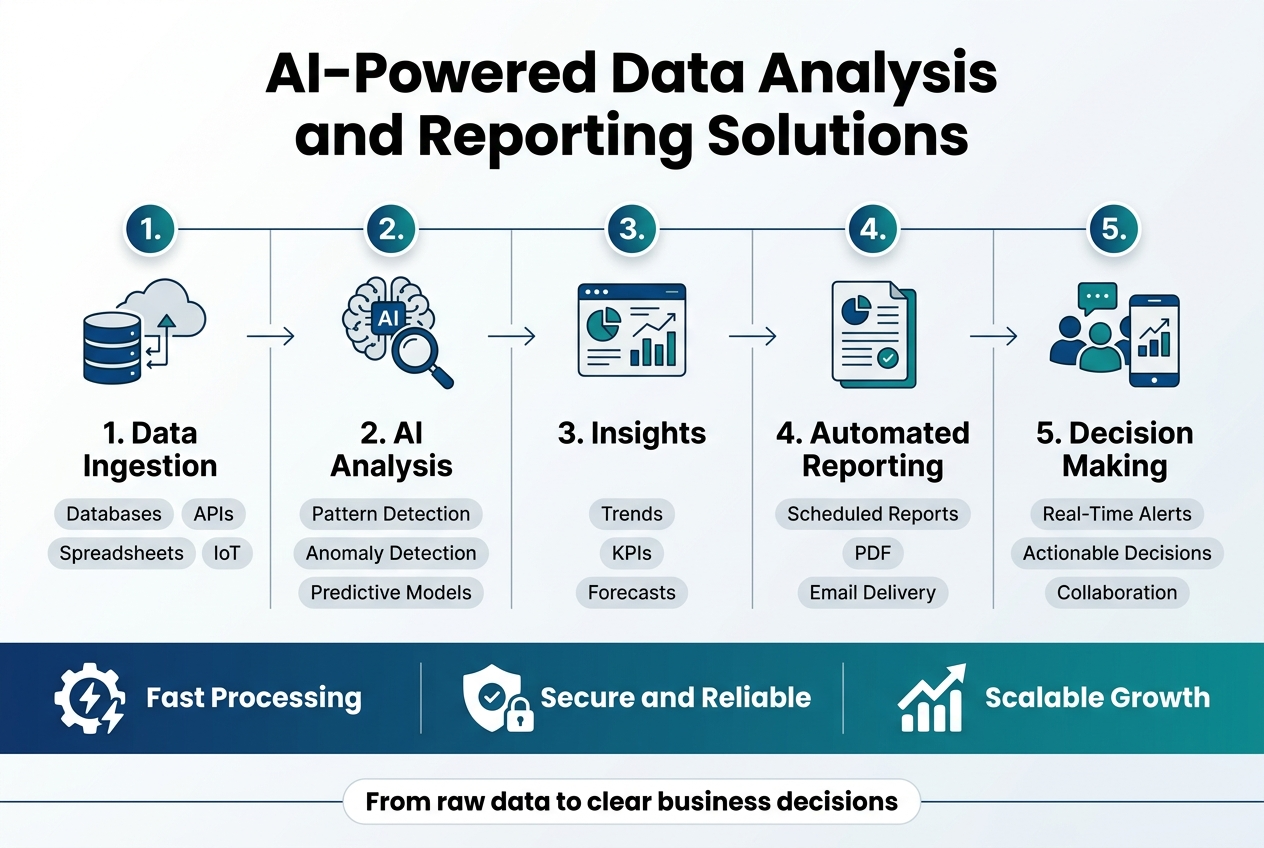
Automated report generation from raw data
Data drowning is real. Companies collect massive amounts of information from sales transactions, website analytics, customer interactions, and operational metrics, but turning this raw data into actionable reports takes forever. Manual report creation can eat up entire days, pulling analysts away from strategic thinking and decision-making.
AI-powered reporting tools are changing this game completely. These platforms can automatically connect to your data sources, clean messy information, identify patterns, and generate comprehensive reports in minutes rather than days. Tools like Tableau’s Ask Data feature, Microsoft’s Power BI with AI capabilities, and emerging platforms like DataRobot are making sophisticated data analysis accessible to anyone, not just data scientists.
The real magic happens when these tools learn your reporting preferences. After a few iterations, AI systems understand which metrics matter most to your business, what time periods to analyze, and how to present information in the most digestible format. They can automatically flag anomalies, highlight trending patterns, and even suggest reasons behind unexpected changes in your data.
Consider how these AI tools for business productivity 2026 handle routine tasks: generating monthly sales reports, tracking KPI performance, or creating compliance documentation. What used to require complex SQL queries and hours of formatting now happens with simple natural language commands. You can literally ask your AI assistant to “show me last quarter’s performance compared to the same period last year, broken down by region and product category.”
Predictive analytics for business forecasting
Crystal balls might be fantasy, but predictive analytics powered by AI comes pretty close to actual fortune-telling. These systems analyze historical patterns, seasonal trends, market conditions, and external factors to forecast future business outcomes with remarkable accuracy.
Modern AI forecasting tools go beyond simple trend analysis. They incorporate machine learning algorithms that continuously improve their predictions as new data becomes available. Platforms like H2O.ai, Amazon Forecast, and Google Cloud AI Platform can process thousands of variables simultaneously, identifying subtle correlations that human analysts might miss.
The best AI workflow automation tools 2026 excel at different types of forecasting challenges. Sales teams use them to predict customer churn, optimal pricing strategies, and revenue projections. Supply chain managers rely on AI forecasting for inventory optimization, demand planning, and supplier risk assessment. Marketing departments leverage these tools to predict campaign performance, customer lifetime value, and optimal budget allocation across channels.
What makes AI forecasting particularly powerful is its ability to incorporate external data sources. Weather patterns, economic indicators, social media sentiment, and even news events can influence business outcomes. AI systems can automatically factor in these variables, creating more robust and accurate predictions than traditional statistical models.
Real-time updates make these forecasts incredibly valuable for decision-making. Instead of waiting for monthly or quarterly reviews, businesses can access updated predictions daily or even hourly, allowing for agile responses to changing market conditions.
Visual dashboard creation with intelligent insights
Dashboards used to be static displays of charts and graphs that required technical expertise to create and maintain. AI-powered dashboard creation has revolutionized this process, automatically generating visual representations of data that actually tell meaningful stories.
Smart dashboard platforms like Looker, Sisense, and emerging AI-native tools can analyze your data and automatically suggest the most effective visualizations. They understand which chart types work best for different data relationships, optimal color schemes for accessibility, and how to arrange information for maximum impact.
The intelligence goes deeper than just pretty charts. These AI apps to improve productivity at work can identify which metrics deserve prominent placement, detect when data points require attention, and even generate natural language explanations of what the visualizations reveal. Instead of staring at a confusing array of numbers, users get clear insights like “Sales in the Northeast region are trending 15% above target, primarily driven by increased demand in the healthcare sector.”
Interactive capabilities make these dashboards incredibly user-friendly. Team members can ask questions in plain English and watch as the dashboard automatically creates relevant visualizations. “Show me conversion rates by marketing channel for mobile users under 35” becomes a simple voice command rather than a complex data query.
Automated alerting systems monitor dashboard metrics continuously, sending notifications when important thresholds are crossed or unusual patterns emerge. This proactive approach means problems get addressed quickly, and opportunities don’t get missed in the daily noise of business operations.
Smart dashboards also adapt to user behavior, learning which metrics different team members access most frequently and customizing displays accordingly. Sales managers see different default views than finance directors, and the system remembers preferences without requiring manual configuration.
Voice-to-Text and Audio Processing Revolutionaries
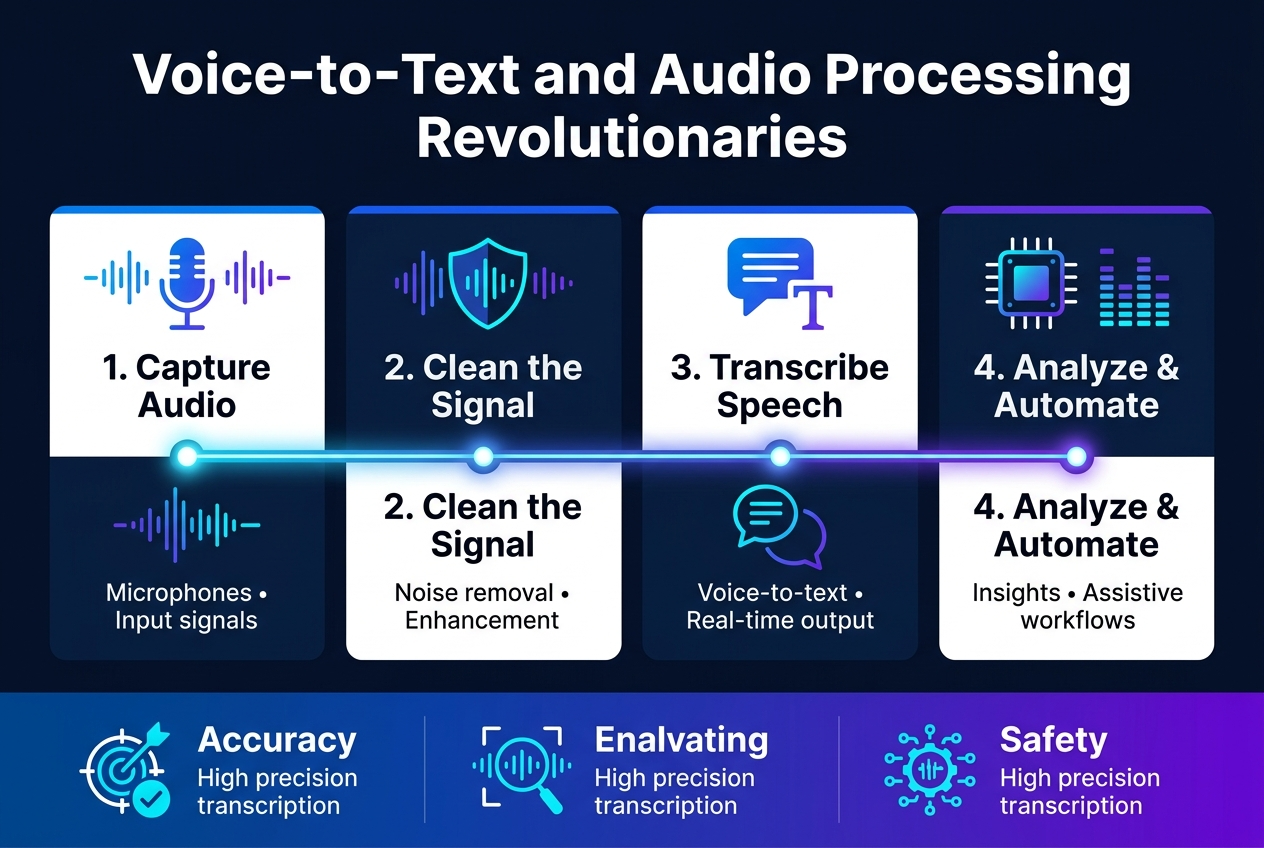
High-accuracy transcription for meetings and interviews
The days of frantically scribbling notes during important meetings are officially over. AI-powered transcription tools now deliver accuracy rates exceeding 95%, even in challenging audio environments. These sophisticated systems handle background noise, multiple speakers, and technical jargon with remarkable precision.
Otter.ai leads the pack with its real-time transcription capabilities, automatically identifying speakers and creating searchable meeting summaries. The platform integrates seamlessly with Zoom, Microsoft Teams, and Google Meet, capturing every word while you focus on the conversation itself. What sets it apart is its ability to learn your organization’s specific terminology and acronyms, improving accuracy over time.
Rev.ai offers both automated and human-hybrid transcription services, giving you flexibility based on your accuracy needs and timeline. Their API handles everything from boardroom discussions to customer interviews, with custom vocabulary training for industry-specific language.
Assembly.ai brings enterprise-grade features to the table, including sentiment analysis and content moderation alongside transcription. This makes it particularly valuable for companies analyzing customer feedback or conducting market research interviews.
Automated podcast and video content summarization
Content creators and businesses producing regular video content can now automate one of their most time-consuming tasks. AI tools extract key insights, generate episode summaries, and even create social media snippets from hours of recorded material.
Descript revolutionizes podcast editing by treating audio like a text document. Upload your recording, and it automatically generates a complete transcript that you can edit by simply deleting words or sentences. The AI removes filler words, adjusts pacing, and creates highlight reels perfect for social media promotion.
Castmagic specializes in turning long-form content into multiple formats. Feed it a podcast episode or webinar recording, and it produces show notes, social media posts, blog articles, and email newsletters. The tool identifies the most engaging moments and creates timestamp-based clips for maximum audience engagement.
Pictory.ai focuses specifically on video content, automatically identifying key scenes and creating short-form content suitable for TikTok, Instagram Reels, or YouTube Shorts. It adds captions, background music, and visual effects without any manual intervention.
Multi-speaker identification and speaker separation
Distinguishing between different voices in group conversations has always been a technical challenge. Modern AI tools now excel at this task, creating organized transcripts that clearly identify who said what and when.
SpeechText.ai offers advanced speaker diarization that works with up to 10 different speakers in a single recording. The system analyzes vocal patterns, speech cadence, and frequency ranges to create distinct speaker profiles throughout the conversation.
Happy Scribe provides both automatic and professional human transcription services with speaker identification. Their AI learns to recognize recurring speakers across multiple sessions, making it perfect for ongoing project meetings or regular team check-ins.
Sonix combines speaker identification with translation capabilities, handling multilingual conversations where participants speak different languages. This proves invaluable for international business meetings or global team collaborations.
Real-time language translation during calls
Breaking down language barriers in real-time opens up global collaboration opportunities that were previously impossible. These AI workflow automation tools translate spoken conversations instantly, enabling seamless communication across language divides.
Microsoft Translator integrates directly into Teams calls, providing live captions and translations in over 60 languages. Participants can choose their preferred language, and the system delivers real-time subtitles throughout the conversation.
Google Translate’s conversation mode now works with voice calls, offering bidirectional translation that maintains conversational flow. The accuracy has improved dramatically, handling context and colloquialisms better than ever before.
Interprefy serves enterprise clients with professional-grade simultaneous interpretation services. Their AI assists human interpreters, reducing fatigue and improving consistency across long meetings or conferences.
Intelligent Calendar and Time Management Systems
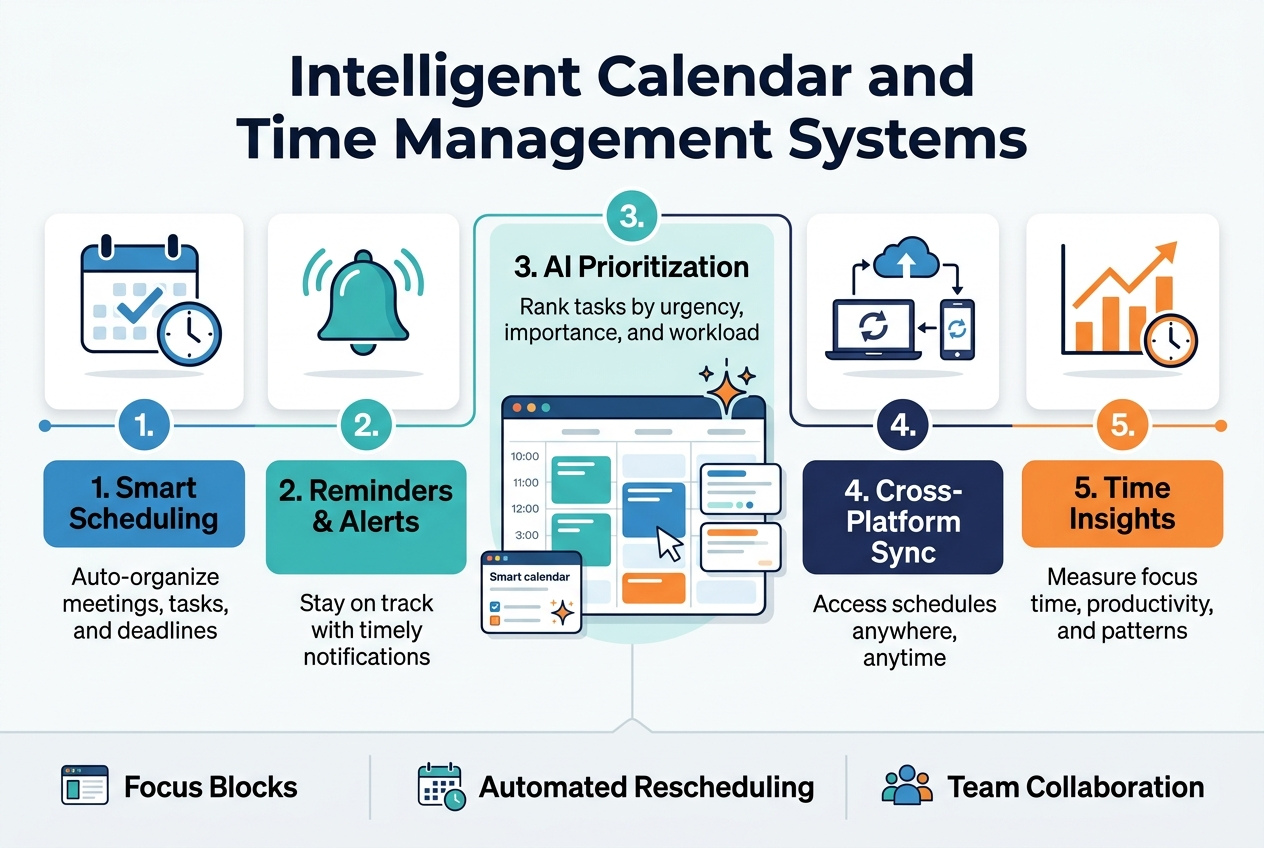
Smart meeting scheduling with conflict resolution
Calendar chaos becomes a thing of the past when AI takes over your scheduling game. Modern AI calendar tools work like having a personal assistant who never sleeps, automatically finding the perfect meeting slots while dodging conflicts like a pro.
These smart systems scan everyone’s availability across multiple time zones, factoring in buffer times between meetings and personal preferences. When someone tries to book over your lunch break or back-to-back marathon sessions, the AI steps in with alternative suggestions that actually make sense.
Top AI scheduling features that deliver results:
- Intelligent conflict detection: Spots overlapping commitments before they become headaches
- Multi-calendar synchronization: Pulls data from work, personal, and team calendars simultaneously
- Automated rescheduling: Moves meetings when urgent priorities pop up
- Smart suggestion algorithms: Recommends optimal meeting times based on attendee patterns
- Integration capabilities: Works seamlessly with Zoom, Teams, Slack, and email platforms
The best AI productivity tools for remote work shine brightest here, especially when team members span different continents. Instead of playing email tag for days, these systems present a few golden time slots that work for everyone.
Automated time blocking for focused work sessions
Deep work doesn’t happen by accident – it requires intentional scheduling that protects your most productive hours. AI-powered time blocking goes beyond basic calendar entries by learning your energy patterns and optimizing your schedule accordingly.
These systems analyze your productivity data to identify when you’re naturally sharp for creative tasks versus administrative work. Some people crush their hardest projects at 9 AM, while others hit their stride after lunch. The AI picks up on these patterns and automatically reserves those peak hours for your most important work.
Key automation features for better focus:
| Feature | Benefit | Example Use Case |
|---|---|---|
| Dynamic block sizing | Adjusts time based on task complexity | 3 hours for strategic planning, 30 minutes for email |
| Distraction barriers | Blocks notifications during focus time | Silences Slack during writing sessions |
| Energy-based scheduling | Matches tasks to your natural rhythms | Creative work in morning, meetings in afternoon |
| Buffer management | Adds transition time between activities | 15-minute breaks between video calls |
The magic happens when these AI workflow automation tools learn your habits and start making suggestions that feel almost psychic. They’ll notice you always need extra time for client presentations and automatically extend those blocks. When you consistently get derailed by afternoon meetings, the system starts protecting your morning hours more aggressively.
Travel time calculation and route optimization
Running late to meetings becomes ancient history when AI handles your travel logistics. These intelligent systems don’t just calculate basic driving time – they factor in real-time traffic, parking availability, weather conditions, and your preferred transportation methods.
Whether you’re hopping between office buildings or navigating across town, the AI continuously monitors conditions and adjusts your departure reminders accordingly. Rain slowing down traffic? You’ll get an earlier nudge to leave. Construction blocking your usual route? The system already mapped out three alternatives.
Advanced travel features that save time:
- Real-time traffic integration: Updates departure times based on current road conditions
- Multi-modal routing: Combines driving, walking, and public transit for optimal routes
- Parking prediction: Estimates availability at your destination
- Weather impact analysis: Adjusts timing for rain, snow, or extreme temperatures
- Learning algorithms: Remembers your preferred routes and timing preferences
These AI tools for business productivity excel at handling complex travel scenarios. Meeting at a new restaurant followed by a client visit across town? The system calculates everything from finding parking to walking time between locations, ensuring you arrive composed rather than stressed.
The best AI workflow automation tools integrate directly with your calendar, automatically adding travel time as buffer periods. No more accidentally booking back-to-back meetings in different buildings or underestimating how long it takes to get through downtown traffic during rush hour.
Document Processing and Knowledge Management Giants
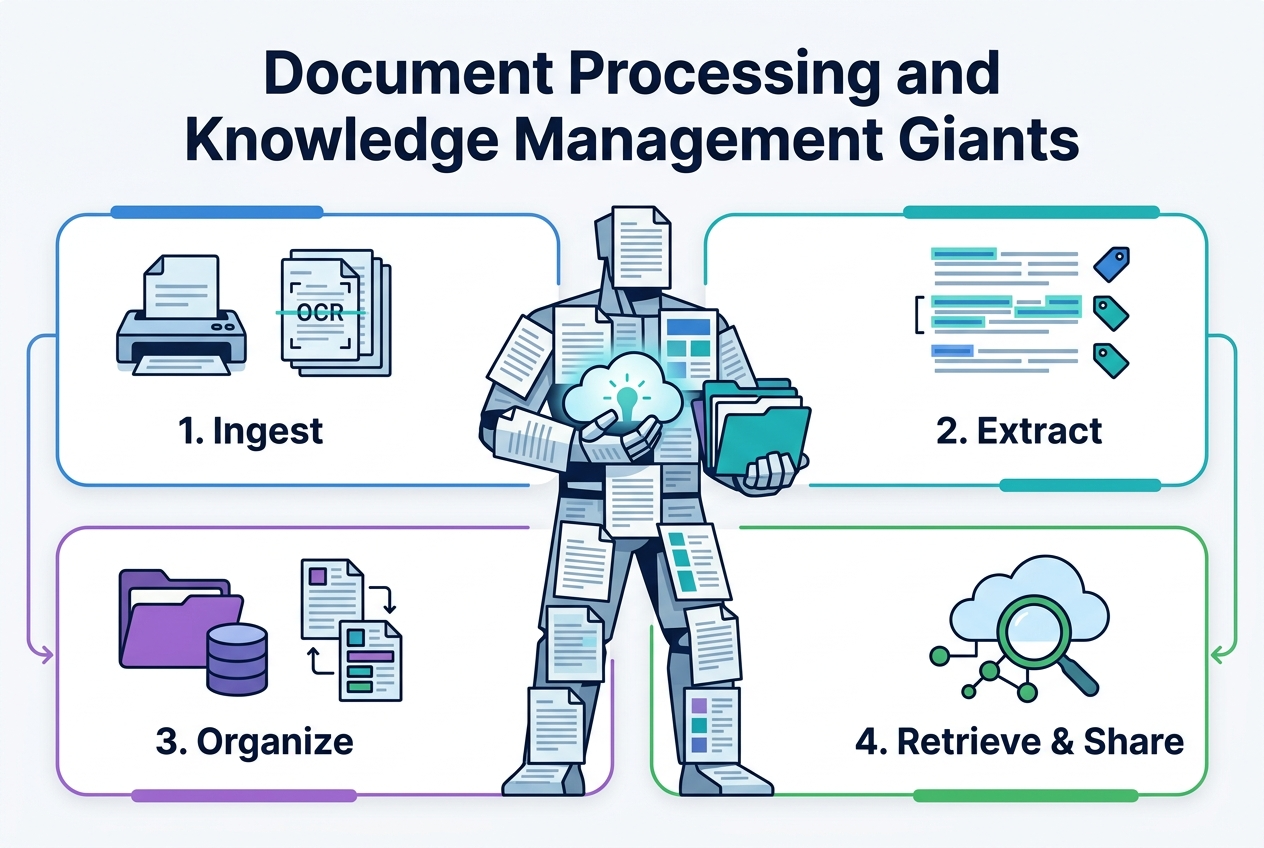
Automated Document Categorization and Tagging
Document chaos kills productivity faster than you might think. The best AI workflow automation tools 2026 excel at transforming your messy file systems into organized, searchable databases. Tools like Notion AI and Obsidian have revolutionized how businesses handle their document libraries by automatically sorting files based on content, project type, and department relevance.
These systems read through your documents and assign relevant tags without human intervention. A marketing brief gets tagged with “marketing,” “Q1 2026,” and “campaign planning” automatically. Financial reports receive tags for “finance,” “quarterly,” and the specific fiscal period. This automation saves hours of manual sorting while ensuring nothing gets lost in digital folders.
The real power comes from machine learning algorithms that get smarter with each document. They learn your organization’s specific terminology, project names, and filing preferences. After a few weeks, these tools anticipate exactly how you want documents categorized, creating a personalized filing system that works seamlessly with your workflow.
Intelligent Information Extraction from PDFs and Images
Modern AI tools for productivity and automation can pull structured data from unstructured documents with remarkable accuracy. Adobe Acrobat’s AI features and tools like Rossum can extract invoice details, contract terms, and form data from scanned documents or images within seconds.
This technology transforms how businesses handle paperwork. Instead of manually typing information from invoices into accounting software, AI extracts vendor names, amounts, dates, and line items automatically. The same applies to contracts, where AI identifies key terms, expiration dates, and renewal clauses without human review.
Image processing capabilities have reached new heights in 2026. These tools can read handwritten notes, extract text from photographs of whiteboards, and even understand tables within complex document layouts. For remote teams and AI productivity tools for remote work, this means capturing information from physical meetings becomes effortless.
| Feature | Capability | Business Impact |
|---|---|---|
| OCR Processing | 99%+ accuracy on printed text | Eliminates manual data entry |
| Handwriting Recognition | Real-time conversion | Digitizes meeting notes instantly |
| Table Extraction | Preserves formatting | Maintains data relationships |
| Multi-language Support | 50+ languages | Global team compatibility |
Smart Search Capabilities Across All File Types
Traditional search functions fall short when dealing with diverse file formats and content types. Top AI workflow automation tools 2026 solve this by creating unified search experiences that understand context, not just keywords. Microsoft 365’s Copilot and Google Workspace’s AI search features exemplify this advancement.
These systems search inside PDFs, Word documents, spreadsheets, presentations, emails, and even video transcripts simultaneously. Ask for “budget proposals from last quarter” and get relevant results from multiple file types, regardless of where they’re stored. The AI understands synonyms, context, and even incomplete queries.
Semantic search capabilities mean you can search by concept rather than exact phrases. Looking for documents about “team productivity” returns files mentioning “workforce efficiency,” “staff performance,” and “employee output” without requiring those specific terms in your search query.
The search extends beyond text content. AI analyzes images within documents, recognizes charts and graphs, and even understands the content of embedded videos or audio files. This comprehensive approach ensures no information remains hidden in your organization’s knowledge base.
Version Control and Collaboration Tracking
Version confusion destroys team productivity and creates compliance nightmares. AI tools for business productivity 2026 address this with intelligent version control that goes beyond simple timestamps. These systems track not just when changes were made, but what specific changes occurred and why.
Collaboration tracking features monitor who accessed documents, what sections they reviewed, and how long they spent on different parts. This insight helps team leaders understand workflow bottlenecks and collaboration patterns. When multiple people edit the same document, AI suggests the most logical merge of changes while flagging potential conflicts.
Smart notifications keep everyone informed without creating noise. Instead of alerting everyone about every change, AI determines which modifications are relevant to specific team members based on their role and previous interactions with the document. Project managers get notified about deadline changes, while designers only hear about visual element updates.
The system maintains a complete audit trail that satisfies compliance requirements while remaining user-friendly. Rollback capabilities let you restore any previous version instantly, and the AI explains what changed between versions in plain English rather than technical diff reports.
These AI apps to improve productivity at work create seamless collaboration experiences where team members can focus on their work instead of managing documents and tracking changes manually.
Social Media Automation and Content Scheduling Masters
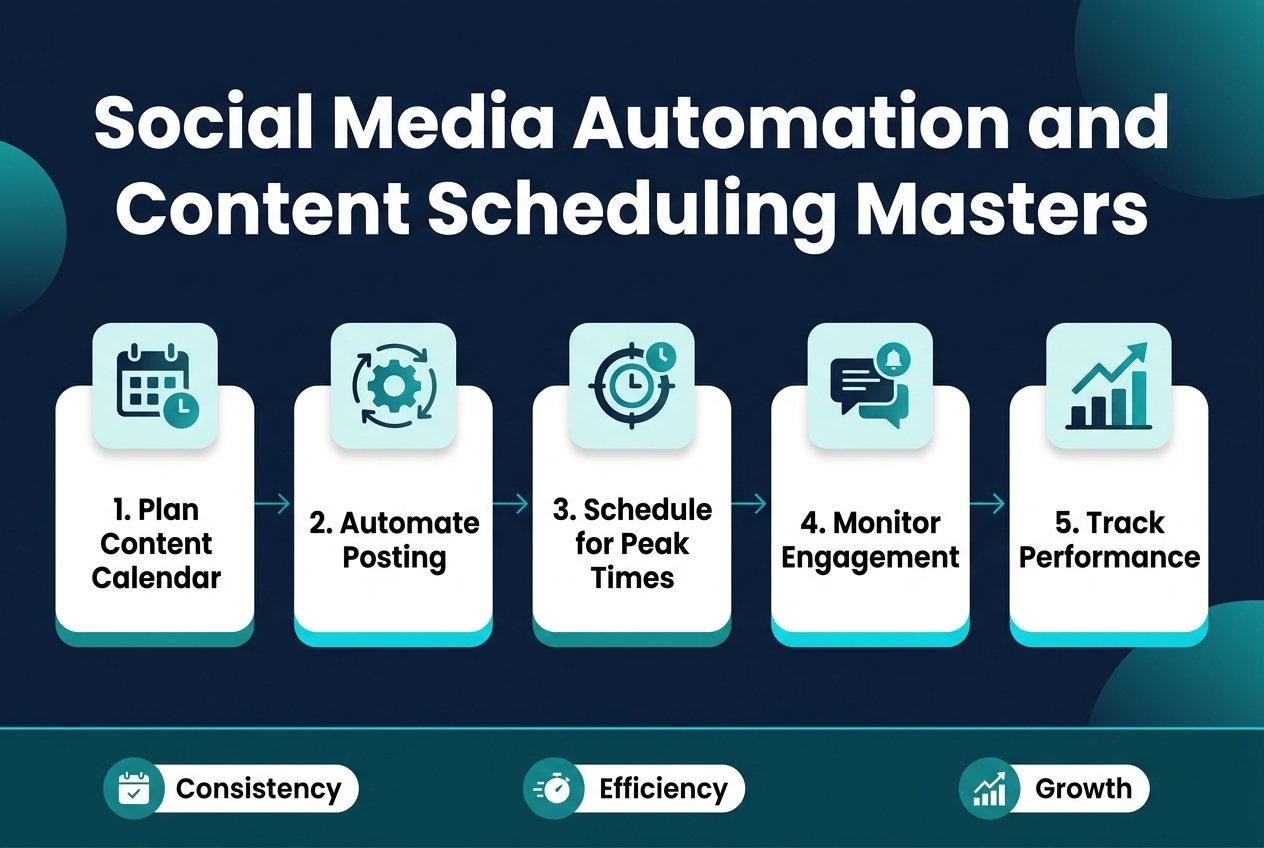
AI-generated post suggestions based on trends
Social media success depends on staying ahead of the curve, and AI tools now make trend-spotting effortless. These platforms analyze millions of posts across platforms to identify emerging topics before they go viral. Tools like Socialbakers and Hootsuite Insights scan real-time data to suggest content ideas that align with current conversations in your industry.
The magic happens when these systems combine trend analysis with your brand voice. AI examines your past high-performing content and creates suggestions that match your style while incorporating trending elements. For instance, if sustainability topics are surging in your sector, the AI might suggest ways to tie your product launches to environmental themes.
Content ideation becomes incredibly efficient when AI tools pull from multiple data sources. They monitor competitor activity, track hashtag performance, and even analyze news cycles to recommend timely content opportunities. Some advanced platforms like Lately and Sprout Social can generate complete post drafts, saving content creators hours of brainstorming time.
Optimal timing recommendations for maximum engagement
Getting your timing right can double or triple your engagement rates, and AI has transformed how we approach posting schedules. These AI productivity tools for remote work analyze your audience’s online behavior patterns, examining when they’re most active, what days generate the highest interaction, and even which time zones matter most for your followers.
Modern scheduling tools go beyond basic “best times to post” charts. They create personalized timing strategies based on your specific audience data. Buffer’s AI analyzes your historical engagement patterns and suggests optimal posting windows that shift based on seasonal trends, holidays, and even current events that might affect social media usage.
| Platform | Key Timing Factors | AI Advantage |
|---|---|---|
| Stories vs Feed timing | Predicts peak audience activity | |
| Professional hours analysis | Identifies B2B engagement windows | |
| Real-time conversation flow | Spots trending conversation moments | |
| Algorithm preference patterns | Adapts to platform changes |
Smart scheduling platforms like Later and CoSchedule now incorporate predictive analytics that forecast engagement potential before you publish. They consider factors like post type, content category, and even weather patterns that might influence social media usage. This level of precision helps maximize reach without overwhelming your audience with too frequent posting.
Automated hashtag research and competitor analysis
Hashtag strategy can make or break your social media reach, and AI tools have revolutionized how we discover and implement these crucial discoverability elements. Platforms like RiteTag and Hashtagify analyze hashtag performance in real-time, showing you which tags are trending up versus declining in popularity.
The competitive intelligence aspect adds another powerful layer. AI tools monitor your competitors’ hashtag strategies, identifying which combinations drive the most engagement for similar content. They spot gaps in your current approach and suggest hashtag clusters that your competitors might be overlooking.
These AI tools for business productivity 2026 don’t just suggest random popular hashtags. They analyze your content’s context, your audience demographics, and your industry vertical to recommend highly targeted tag combinations. Some tools even predict which hashtags are likely to gain traction in the coming weeks based on seasonal patterns and emerging trends.
Advanced platforms create hashtag portfolios that balance high-competition tags with niche-specific ones. They track performance metrics for each tag you use, gradually refining your strategy based on actual results. Tools like Sprout Social and Agorapulse maintain databases of hashtag performance across different industries, making recommendations increasingly precise over time.
The automation extends to competitor monitoring, where AI tools track when competitors post, which hashtags they use, and how their audience responds. This intelligence helps you identify content gaps and timing opportunities that your competition might be missing.
Customer Service and Support Automation Champions
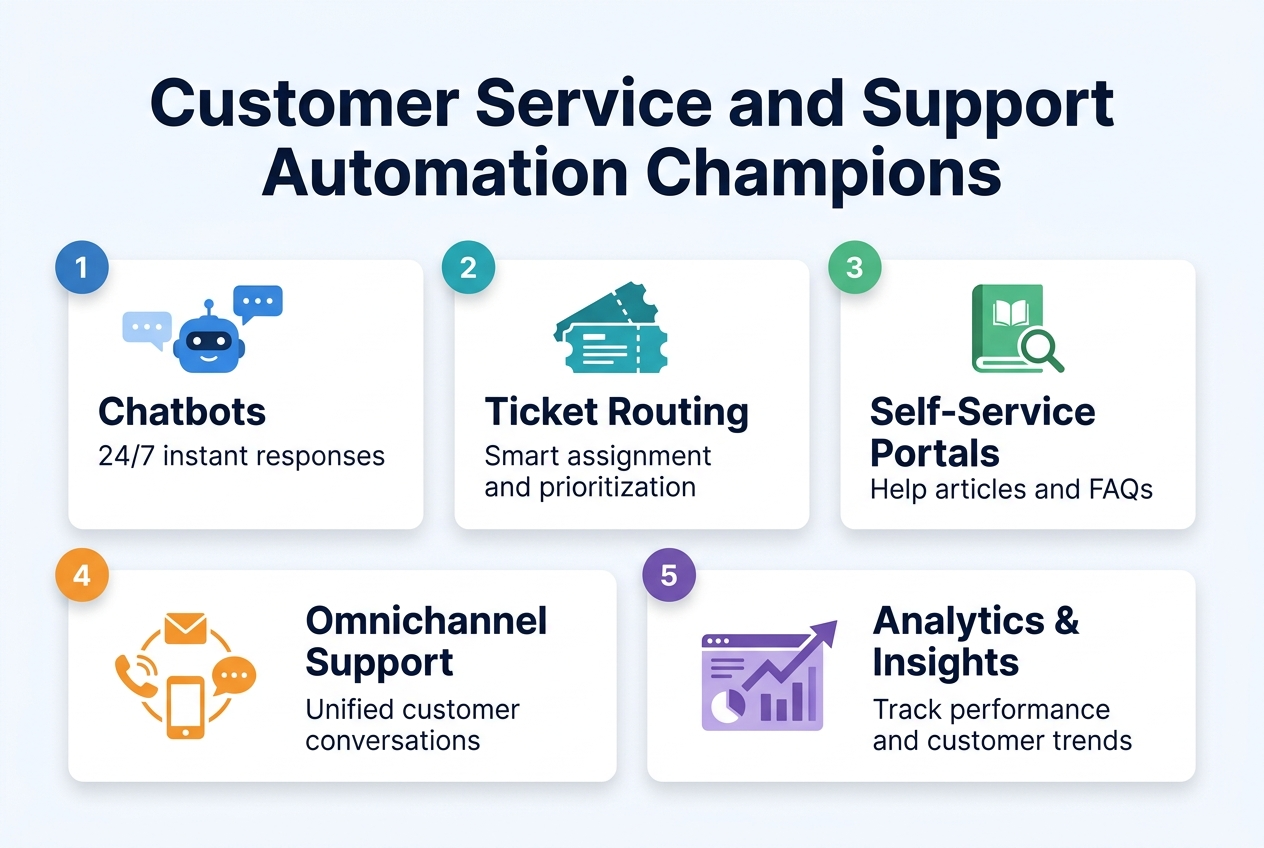
Intelligent chatbot deployment for common queries
Modern customer service transforms dramatically when you deploy smart chatbots that handle routine inquiries without human intervention. These AI-powered assistants excel at answering frequently asked questions, processing basic requests, and guiding customers through standard procedures 24/7. The best AI workflow automation tools 2026 include sophisticated chatbot platforms that understand natural language, context, and even emotional nuances in customer communications.
Leading chatbot solutions like Intercom’s Resolution Bot and Zendesk’s Answer Bot can resolve up to 80% of common customer queries instantly. They integrate seamlessly with existing help desk systems and learn from every interaction. These bots don’t just provide scripted responses – they analyze conversation patterns, customer history, and product knowledge bases to deliver personalized assistance that feels genuinely helpful.
The deployment process has become remarkably straightforward. Most platforms offer drag-and-drop interfaces where you can build conversation flows, set up fallback responses, and configure escalation triggers. When customers ask about shipping status, return policies, or account information, these AI tools for productivity and automation handle everything automatically while collecting valuable interaction data.
Automated ticket routing and priority assignment
Smart ticket routing eliminates the chaos of manual assignment and ensures customer issues reach the right agents immediately. Advanced AI algorithms analyze incoming tickets based on content, urgency keywords, customer tier, and historical patterns to route requests with surgical precision. This automation reduces response times by up to 70% while improving first-contact resolution rates significantly.
The most sophisticated systems go beyond simple keyword matching. They examine customer sentiment, previous interaction history, and agent expertise to make intelligent routing decisions. High-value customers automatically get priority handling, technical issues flow to specialized teams, and urgent matters trigger immediate notifications to senior staff.
Modern routing engines also consider agent workload, availability, and performance metrics. If your top technical support specialist is overwhelmed, the system automatically redistributes new technical tickets to other qualified team members. This dynamic load balancing prevents bottlenecks and maintains consistent service quality across your entire support operation.
Sentiment analysis for customer feedback processing
Customer sentiment analysis reveals the emotional undertones behind every support interaction, complaint, or feedback submission. These AI tools for business productivity 2026 scan text, voice recordings, and even chat conversations to identify frustrated, satisfied, or neutral customers. This insight helps prioritize responses and tailor communication strategies to match customer emotional states.
Advanced sentiment engines detect subtle emotional cues that human agents might miss during busy periods. They flag potentially escalating situations before they explode into major complaints, identify exceptionally happy customers for upselling opportunities, and track sentiment trends across different product lines or service areas.
The real power emerges when sentiment data combines with other customer metrics. You can identify patterns like “customers who mention billing issues show 60% negative sentiment” or “product returns correlate with frustrated initial support contacts.” These insights drive proactive improvements to products, policies, and support processes.
Personalized response templates based on customer history
Generic responses feel impersonal and often miss the mark completely. AI-driven template systems analyze customer interaction history, purchase patterns, and preferences to generate contextually appropriate responses that feel custom-crafted. These systems maintain brand voice consistency while adapting tone and content to match individual customer needs and communication styles.
Smart template engines access comprehensive customer profiles including previous purchases, support history, communication preferences, and resolution outcomes. When addressing a premium customer’s technical issue, the system automatically selects more detailed explanations and expedited resolution options. For price-sensitive customers, responses emphasize value and cost-effective solutions.
The personalization extends beyond simple variable insertion. These AI productivity tools for remote work understand context clues like customer expertise level, preferred communication channels, and resolution preferences. A tech-savvy customer receives detailed troubleshooting steps, while less technical users get simplified instructions with offer to schedule phone support. This adaptive approach dramatically improves customer satisfaction scores while reducing back-and-forth communications.
Integration Platforms That Connect Your Entire Tech Stack
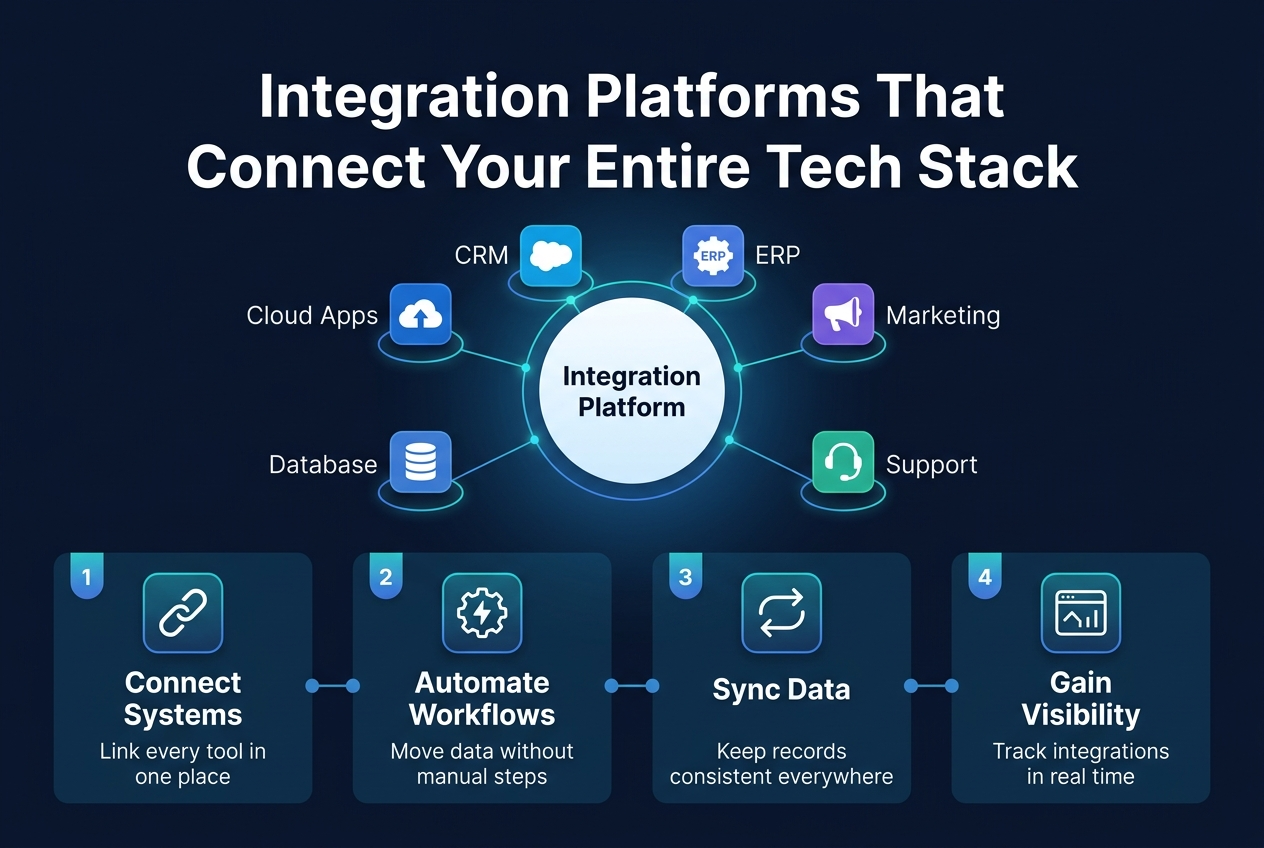
Seamless data synchronization between multiple apps
Modern businesses run on dozens of different software applications, from CRM platforms to accounting tools, marketing automation systems, and project management apps. The challenge? These tools often exist in isolation, creating data silos that hurt productivity and lead to manual data entry nightmares. AI workflow automation tools 2026 have revolutionized how we handle this complexity through intelligent integration platforms.
These platforms act as the central nervous system of your digital workspace, automatically moving data between applications without human intervention. When a new lead enters your CRM, the integration platform can instantly create a corresponding record in your email marketing tool, add them to relevant nurture sequences, and notify your sales team through Slack. All of this happens in real-time, without anyone lifting a finger.
The best AI tools to automate workflow in 2026 excel at understanding data formats across different platforms. They automatically map fields between applications, handle data transformation, and ensure consistency. For example, when customer information updates in your support system, the platform intelligently propagates these changes to your billing software, project management tool, and any other connected applications.
What makes these solutions particularly powerful is their ability to handle complex, multi-step data flows. Instead of simple one-to-one connections, modern integration platforms create sophisticated data pipelines that can involve multiple applications and conditional logic. They learn from your data patterns and suggest optimizations for better synchronization performance.
Custom workflow automation without coding knowledge
Gone are the days when automation required a computer science degree. Today’s AI productivity tools for remote work feature intuitive visual builders that let anyone create powerful automated workflows through simple drag-and-drop interfaces. These platforms have democratized automation, putting advanced capabilities into the hands of marketers, HR professionals, and small business owners.
The visual workflow builders use flowchart-style interfaces where you can map out your business processes step by step. Want to automatically onboard new employees? Simply create a workflow that triggers when someone signs an employment contract, then automatically generates accounts across all necessary systems, sends welcome emails, schedules orientation meetings, and adds them to relevant team channels.
These platforms often include pre-built workflow templates for common business scenarios. Whether you need to process invoices, handle customer support tickets, or manage social media posting schedules, you can start with proven templates and customize them to fit your specific needs. The AI apps to improve productivity at work learn from how you modify these templates and suggest improvements over time.
Smart triggers make these workflows incredibly flexible. You can set up automation based on time schedules, data changes, file uploads, email receipts, form submissions, or even external events like weather conditions or stock price movements. The platforms handle all the technical complexity behind the scenes, letting you focus on designing the logic of your business processes.
Real-time notifications and alert management
Information overload is a real productivity killer, but intelligent alert management systems solve this by delivering the right information to the right person at exactly the right moment. These best AI software for task automation platforms use machine learning to understand your communication patterns and prioritize notifications based on urgency and relevance.
Smart notification systems go far beyond simple email alerts. They can send notifications through your preferred channels – whether that’s Slack, Microsoft Teams, mobile push notifications, or SMS messages. The system learns your preferences and automatically routes different types of alerts through appropriate channels based on their importance and your availability.
The real magic happens in notification intelligence. Instead of bombarding you with every system update, these platforms analyze patterns to determine what actually requires your attention. They can detect anomalies in your business metrics and send proactive alerts when something needs immediate action, while filtering out routine notifications that don’t require intervention.
Advanced alert management includes escalation protocols that automatically route notifications to backup team members if the primary contact doesn’t respond within specified timeframes. This ensures critical issues never fall through the cracks, especially important for AI workflow tools for small businesses where team members often wear multiple hats.
These systems also provide powerful customization options, allowing you to set up complex conditional logic for when and how alerts are delivered. You can create quiet hours, vacation mode settings, and priority-based routing that adapts to your team’s working patterns and responsibilities.
These ten AI productivity tools represent a massive shift in how we approach work in 2026. From writing assistants that craft content in minutes to smart calendars that manage your schedule like a personal assistant, these platforms can free up countless hours in your day. The real game-changer isn’t just using one or two of these tools – it’s finding the right combination that works for your specific workflow and watching them work together seamlessly.
Ready to reclaim your time and boost your productivity? Start with the area where you feel the most overwhelmed – maybe it’s email management or content creation – and test out one of these AI solutions for a week. You’ll quickly see which tools deliver the biggest impact for your daily routine. The future of work is already here, and these AI assistants are ready to become your most valuable team members.